


QuickTakes Newsletter
August 20, 2026
OSHA’S BIG PICTURE
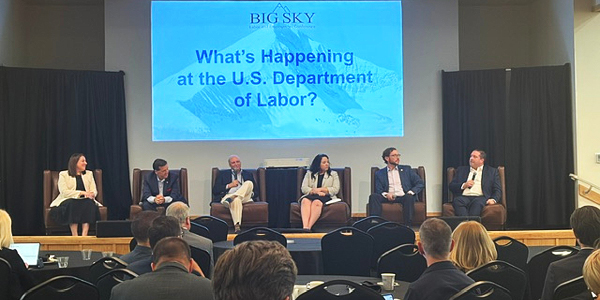
While at the Big Sky Labor and Employment Conference, OSHA Assistant Secretary David Keeling shared the agency’s goals for working more closely with employers, listening to stakeholders, and emphasizing the importance of prevention to businesses.
Keeling outlined several ways OSHA plans to advance that vision:
- Provide small businesses with tailored guidance and practical support.
- Understand stakeholders’ needs and how OSHA can be most effective for them.
- Build stronger partnerships across industries, associations, and alliances to share what works and amplify safety successes.
- Make resources easier to access by promoting onsite consultation, expanding training tools and enhancing digital resources so employers understand requirements before an incident happens.
Keeling also highlighted the OSHA CARES Initiative, a customer service effort that aims to enhance stakeholders’ understanding of workplace safety and health requirements, as well as the Safety Champions Program, which supports participating employers in developing new and improved safety and health programs.
The focus on assistance and partnership is paired with a strong enforcement role. Keeling emphasized OSHA priorities that include hiring compliance officers, focusing enforcement efforts on repeat violators and other bad actors, and modernizing outdated rules by prioritizing clarity and efficiency to meet the needs of today’s workforce.
DATES TO REMEMBER

August 30-September 2: VPPPA Safety+ Symposium
September: Suicide Prevention Month
September 11-18: NSC Safety Congress and Expo
September 14-18: Construction Suicide Prevention Week
September 15-18: Annual NUCA Safety & Damage Prevention Conference
September 16: Confronting Suicide in the Construction Industry (hosted by NUCA)
September 21-25: Farm Safety and Health Week
Do you have a public safety and health event, training, or webinar that you'd like to have featured in QuickTakes? Please share event information with us including the date, time, location, and a short description.
ARE YOU PREPARED?
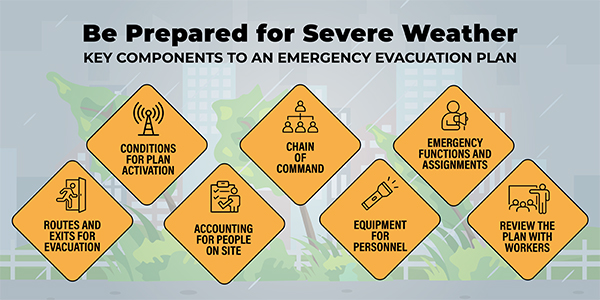
September is both peak hurricane season and National Preparedness Month. Does your workplace have an emergency evacuation plan in place? Planning ahead plays a vital role in helping employers and workers know what to do, where to go, and what equipment they need to stay safe when an emergency occurs. Visit our Emergency Preparedness and Response page to learn more.
KEY COMPONENTS OF AN EMERGENCY EVACUATION PLAN
- Conditions for plan activation
- Chain of command
- Emergency functions and assignments
- Routes and exits for evacuation
- Accounting for people on site
- Equipment for personnel
- Review the plan with workers
BETTER TOGETHER
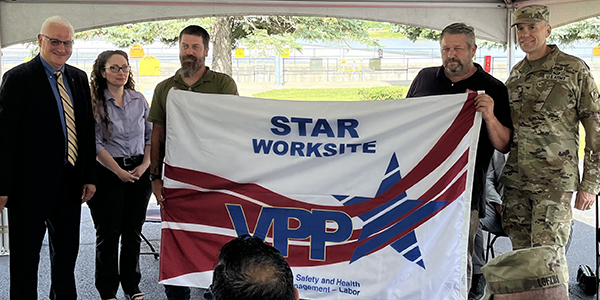
The U.S. Army Corps of Engineers Albany Field Office recently celebrated their approval as a Star Site in OSHA’s Voluntary Protection Programs. The VPP Star is OSHA's highest level of recognition for employers and workers whose safety and health programs have kept injury and illness rates below industry averages.
OSHA Regional Administrator Richard Mendelson presented the VPP Star plaque and Area Director Rita Young presented the VPP Star flag to site personnel. The Albany field office maintains the Federal Hudson River and Lake Champlain Navigation Channel through operations including dredging and drift collection. It also operates and maintains the gateway lock to the Erie and Champlain canals.
The Voluntary Protection Programs bring company management, site employees, and OSHA together to focus on hazard prevention and control, worksite analysis, training, management commitment, and worker involvement, to prevent fatalities, injuries, and illnesses.
SAFETY TAKES OFF AT NASA

What does a strong safety culture look like in action? At NASA’s Kennedy Space Center, it means teamwork, employee involvement and a commitment to continuous improvement. A designated OSHA Voluntary Protection Program Star Site since 2003, the Kennedy Space Center uses the program’s seven core elements – from management leadership and worker participation to hazard prevention and training – to help keep thousands of employees safe. In this video, VPP Program Manager Jeffrey Silva explains how the program supports a collaborative approach to safety and helps the center maintain injury and illness rates below the industry’s national average
YOU HAVE A RIGHT TO REPORT

A legal counsel at an investment firm raised concerns after finding inaccurate reports about funds and revenue that had not been provided to the Securities and Exchange Commission. The employee was placed on a performance improvement plan and later told they would be fired following the completion of an inquiry.
The employee filed a whistleblower complaint with OSHA. Our investigation found that the employer retaliated against the employee in violation of the Sarbanes-Oxley Act, which protects employees of companies required to file certain reports to the SEC from retaliation for reporting alleged mail, wire, bank, or securities fraud, or other financial violations. As a result, OSHA ensured that the employee could keep their job and have their work record cleared.
Workers have the right to report safety or other concerns without fear of retaliation, and speaking up can help protect others in the future. If you believe you were retaliated against for exercising your legal rights, you can file a whistleblower complaint with OSHA.
YOU ASK…WE ANSWER

❓ Does OSHA have any guidance on protecting outdoor employees in areas where air quality is affected by wildfires?
🗣️ Federal OSHA does not have a specific standard for wildfire smoke exposure but relies on the General Duty Clause of the Occupational Safety and Health Act, which requires employers to provide a workplace free of recognized hazards.
The biggest risk from wildfire smoke is fine particles of matter floating in the air that can reach the lungs and bloodstream and are tied to lung, heart, and kidney disease. Smoke exposure can also cause heat stress and eye/respiratory irritation.
In the past, when Canadian wildfires drove unhealthy air across the U.S., OSHA provided employers guidance to help protect outdoor workers from exposure to related health hazards:
- Require and encourage workers to take breaks in smoke-free places when possible, and where feasible, let employees work inside with proper HVAC systems and high-efficiency air filters.
- Provide or allow NIOSH-approved respirators for voluntary use, with the required advisory information from Appendix D of OSHA's Respirator Protection Standard.
- OSHA recommends monitoring air quality and considering appropriate measures to reduce exposure as conditions deteriorate.
Several states – such as California, Oregon, and New York – have their own wildfire smoke standards that apply whenever smoke drifts into their jurisdiction and pushes the local air quality index into unhealthy ranges.
WHAT’S TRENDING
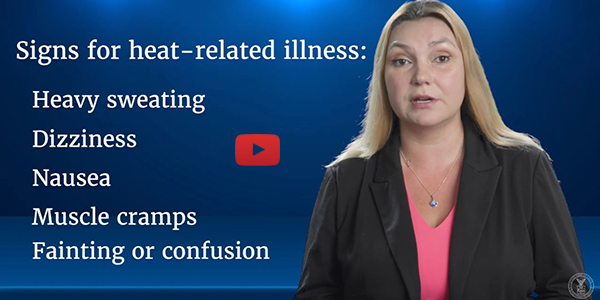
Have a minute? Watch this short video to learn how to recognize and respond to signs of heat illness. You can also visit our website for more information.
Missed a minute? Visit our video webpage to watch all the episodes in this series
We appreciate your commitment to remain informed about what affects the safety and health of America's workers.
You can also read this issue on OSHA's website at osha.gov/quicktakes/082026.


Occupational Safety and Health Administration
200 Constitution Ave. NW, Washington, DC 20210
202-693-1999
You can unsubscribe from this list. (We will miss you!)
QuickTakes subscribers occasionally receive DYK? bulletins about a single timely topic, resource or upcoming event.