


QuickTakes Newsletter
February 13, 2026
PARTNERING TO PROTECT WORKERS
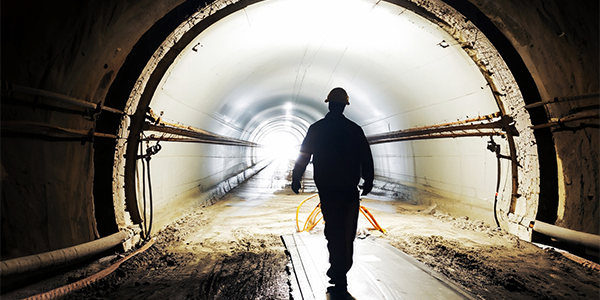
Beneath the hills of New Hampshire, a major tunnel project is taking shape – and so is a strong commitment to worker safety. To protect the workers building this critical infrastructure, OSHA and the Methuen Obayashi Joint Venture joined forces in a strategic partnership focused on preventing workplace hazards.
The collaboration highlights the unique dangers of civil construction, from exposure to hazardous gases and pressurized zones to the risks of confined spaces, struck-by incidents, and unstable excavations. Through this partnership, OSHA and Methuen Obayashi are reinforcing the use of proper shoring and protective systems while helping contractors develop and carry out effective safety and health programs.
Training is also a key part of the effort. Subcontractors working on the project receive hands-on guidance to recognize and address hazards before they become incidents – both inside the tunnel and throughout the surrounding construction site.
This partnership stands as another example of how OSHA and industry leaders can work side by side, turning shared responsibility into real protection, and ensuring that at the end of every shift, every worker goes home safe.
UPCOMING EVENTS

February 1 - April 30: Employers must keep their 300A summary of workplace injuries and illnesses recorded in 2025 posted where it will be visible to all employees.
February 24: Temporary Workers in the Construction Industry webinar.
March 2: The deadline for covered employers to submit calendar year 2025 injury and illness data through the Injury Tracking Application (ITA).
March 3-7: ConExpo-Con/Agg International Construction Trade Show
March 16-19: Pacific Coast Safety Fest live virtual safety and health training event.
April 23 at 1:00 p.m. ET: Workers Memorial Day Ceremonies
April 23, 7:00 p.m. ET: Workers Memorial Candlelight Vigil
Do you have a public safety and health event, training, or webinar that you’d like to have featured in QuickTakes. Please share event information with us including the date, time, location, and short description.
ELECTRICAL SAFETY
As part of our ongoing efforts to improve safety on construction sites, we are launching an Electrical Roll Up Initiative to promote basic electrical safety awareness throughout the industry.
The initiative:
- highlights the need for construction sites to inspect electrical cords and Ground Fault Circuit Interrupters, extension cords and power tool cords;
- provides basic inspection and maintenance guidelines for construction contractors on common electrical issues related to extension cords and power tools; and
- allows participants to identify defective equipment during the “Roll-Up” and note the defect rate of equipment inspected and removed from service.
SAFETY AT EVERY LEVEL
Building a strong safety and health program isn't just about compliance - it's about protecting your people. Our new Safety Champions Program meets employers where they are and helps them strengthen their safety culture to prevent workplace injuries, illnesses, and fatalities.
The program is built around OSHA's Recommended Practices for Safety and Health Programs and focuses on seven core elements:
- Management Leadership
- Worker Participation
- Hazard Identification and Assessment
- Hazard Prevention and Control
- Education and Training
- Program Evaluation and Improvement
- Communication and Coordination (for host employers, contractors, and staffing agencies)
Participants move through three self-guided levels - introductory, intermediate, and advanced - at their own pace. Need expert insight along the way? Participants may request a Safety Champion Special Government Employee to assess their program and progress at any stage.
Take the next step toward a safer workplace. Start your Safety Champion journey today - click here to register.
CONTROL COMBUSTIBLE DUST
Keeping work areas clean and equipment properly maintained isn't just good practice - it can prevent serious incidents. In July 2025, a worker at Horizon Biofuels' Fremont facility in Nebraska was fatally injured in an explosion. OSHA's investigation found that dust had built up in the plant, equipment wasn't properly protected from sparks, and employees working at heights greater than four feet lacked fall protection. The company was cited for these safety violations, with proposed penalties of $147,542.
This serves as an important reminder for all workplaces that regular cleaning, proper equipment maintenance, controlling ignition sources, and using the right safety gear are essential steps to protect employees. Guidance and free resources on OSHA's combustible dust webpage. Safety isn't optional - it can save lives.
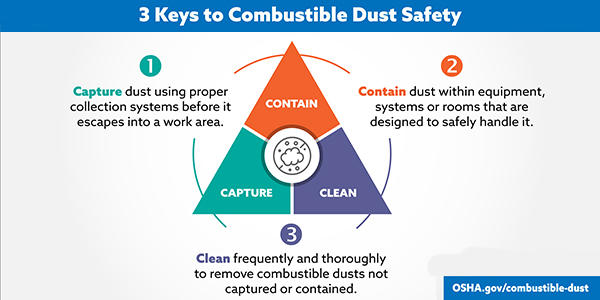
3 Keys to Combustible Dust Safety
Capture dust using proper collection systems before it escapes into a work area.
Contain dust within equipment, systems or rooms that are designed to safely handle it.
Clean frequently and thoroughly to remove combustible dusts not captured or contained.
MISSION: COLLABORATION
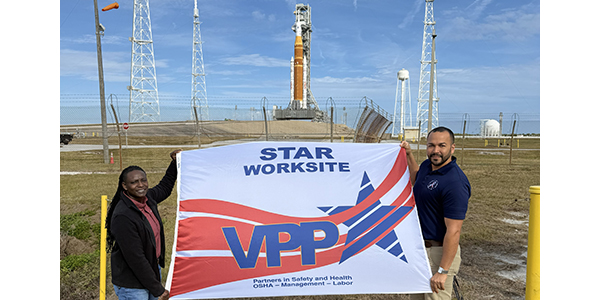
For the first time in more than 50 years, NASA is preparing for lunar travel with the upcoming launch of the Artemis II mission with its four-person crew. Launch Complex 39B at Kennedy Space Center in Florida has participated in OSHA's Voluntary Protection Programs for 23 years. Across the 140,000-acre complex and its multiple facilities, the site has maintained a strong focus on safely processing flight hardware without compromise. This was achieved through an effective collaboration of civil servants and contractors across diverse fields who are as committed to the safety of the workers who are making this journey into space possible, as they are to protecting the astronauts who will take it.
GUIDE TO REPORTING

Establishments that are required to electronically submit their annual injury and illness data to OSHA’s Injury Tracking Application (ITA) can find step-by-step instructions with the ITA User Guide. This guide can walk you through the entire process with step-by-step instructions and helpful tips to make electronic submission quick and easy. Whether you’re submitting for the first time or refreshing your process, the guide can help you understand when your submission was successful. Find the guide and other helpful ITA resources at www.osha.gov/injuryreporting.
YOU ASK...WE ANSWER

Q: When do I have to use lockout/tagout instead of just shutting something off?
A: OSHA requires lockout/tagout whenever servicing or maintaining equipment could expose a worker to unexpected startup or the release of stored energy.
Simply turning the machine off is not enough if it could be restarted, still has stored energy, or could cause injury. Lockout/tagout must be used to fully isolate and control hazardous energy.
WHAT’S TRENDING

Have a minute? Watch this short video to hear about how workers and employers can address trenching hazards together to prevent worksite tragedies.


Occupational Safety and Health Administration
200 Constitution Ave. NW, Washington, DC 20210
202-693-1999
You can unsubscribe from this list. (We will miss you!)
QuickTakes subscribers occasionally receive DYK? bulletins about a single timely topic, resource or upcoming event.