


Worker Rights and Protections

Concerned about health and safety on the job?
Learn how OSHA protects you, and what to do if you think you are not protected at work.

Concerned about health and safety on the job?
Learn how OSHA protects you, and what to do if you think you are not protected at work.
Concerned about health and safety on the job?
Learn how OSHA protects you, and what to do if you think you are not protected at work.
Concerned about health and safety on the job?
Learn how OSHA protects you, and what to do if you think you are not protected at work.
Know Your Rights
Federal law gives you the right to work in a safe place. Your employer must keep the workplace free from known safety and health hazards. You can speak up or report safety concerns without being punished or treated unfairly. You also have the right to:
- Receive workplace safety and health training in a language you understand
- Work on machines that are safe
- Refuse to work in a situation in which you would be exposed to a hazard
- Receive required safety equipment, such as gloves or a harness and lifeline for falls
- Be protected from toxic chemicals
- Request an OSHA inspection, and speak to the inspector
- Report an injury or illness, and get copies of your medical records
- Review records of work-related injuries and illnesses
- See results of tests taken to find workplace hazards
How to File a Complaint
Safety and Health Complaint
If you think your workplace is unsafe or unhealthy, you can file a confidential complaint with OSHA and ask them to inspect it. If you can, try telling your employer about the problem first. They may be able to fix it quickly.
Report a Safety and Health Concern
Whistleblower Rights
It is illegal for an employer to fire, demote, transfer, or otherwise retaliate against a worker for complaining to OSHA. If you believe your employer retaliated against you for using your rights under OSHA’s whistleblower protection laws, you can file a whistleblower complaint within 30 days of the retaliation.
Contact OSHA
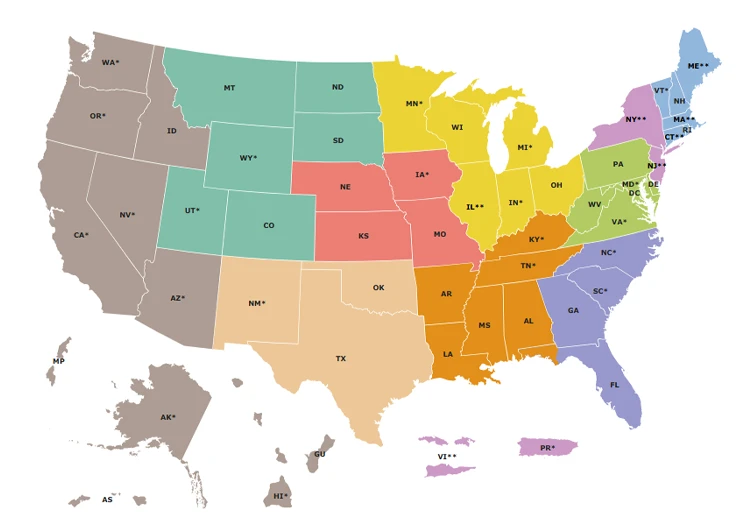
To talk about safety and health issues at work, contact OSHA toll-free at 1-800-321-6742 (OSHA), Ask OSHA a question, or find your nearest federal or State Plan office.
Frequently Asked Questions
- What should I do if there is a dangerous situation at work?
- Am I covered by OSHA?
- What if I am injured at work?
- Can someone file a complaint for me?
- What happens after I file a complaint?
- What are my employers' responsibilities?
- What are my rights during an inspection?
- Does OSHA have other resources to help me?
- Does my employer have to provide Personal Protective Equipment (PPE) and who pays for it?
PSAs and Videos
- Listen to public service announcements in multiple languages about your right to speak up about unsafe working conditions without fear of retaliation.
- Watch videos to learn more about your right to a safe and healthful workplace.
Publications
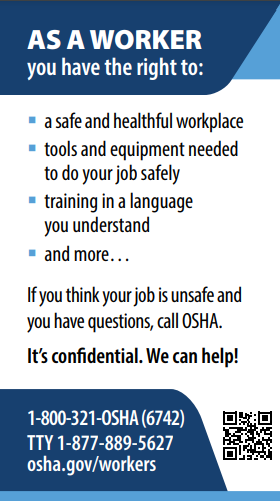
Workers' Rights - Vertical Wallet Card
Multiple Languages

Human Trafficking Fact Sheet
Español: PDF
Workers Have Rights Card
Multiple Languages
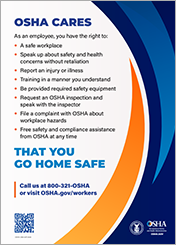
Job Safety and Health Workplace Poster

Labor Trafficking Wallet Card
Multiple Languages
Tools and Resources


Common Hazard Citations
- See a list of the top 10 most frequently cited standards across all industries.
- Search for commonly cited workplace hazards with your employer's North American Industry Classification System (NAICS) code. Once you know your six-digit code, visit OSHA's Frequently Cited OSHA Standards page, enter your NAICS code and view the information for last year.

OSHA Law and Standards
The Occupational Safety and Health Act of 1970 created OSHA, which sets and enforces protective workplace safety and health standards. There are OSHA standards for construction, agriculture, maritime and general industry. Employers also must comply with the General Duty Clause of the OSH Act, which requires them to keep their workplaces free of serious recognized hazards.