


QuickTakes Newsletter
August 06, 2026

PROTECTING WAREHOUSE WORKERS

Preventing injuries starts with identifying workplace hazards before they lead to incidents. We have renewed our National Emphasis Program (NEP) to protect the safety and health of warehouse and distribution center workers. Under the renewed NEP, OSHA will conduct comprehensive inspections focused on common industry hazards, including:
- Powered industrial truck (forklift) operations
- Material handling and storage
- Walking-working surfaces, including slips, trips, and falls
- Means of egress and emergency exits
- Heat hazards
- Ergonomic risks
- Fire protection and prevention
The NEP has been extended from three years to five years, providing greater continuity in OSHA's enforcement efforts. The renewed program also provides clearer instruction on OSHA’s authority to expand inspections when fatalities, catastrophes, complaints, or referrals involve establishments within the covered industries.
Employers can use this opportunity to review their workplace safety and health programs, address potential hazards, and strengthen measures that help protect workers.
For more information, read the NEP and visit our Warehousing webpage for resources to keep workers safe.
PARTNERSHIP IN ACTION
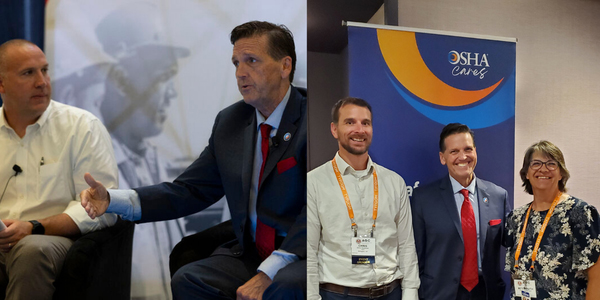
At the Associated General Contractors conference in Minneapolis last month, OSHA Assistant Secretary David Keeling shared a message he has heard consistently from employers across the country: they want practical resources, clear guidance, and support to identify hazards before someone gets hurt.
Keeling explained that's the goal of the OSHA CARES initiative. Through expanded compliance assistance and strengthened cooperative programs, we are working to engage employers earlier and help them build stronger, more effective safety and health programs.
He emphasized that safety suffers whenever it is treated as a competing priority with production. But when safety is embedded into how work is planned, managed, and executed every day, everyone benefits. Safety belongs to executives, project managers, superintendents, subcontractors, and every worker on the jobsite. That collective ownership is what creates lasting safety cultures.
Whether you're a general contractor, a subcontractor, a safety professional, or someone from OSHA, we have the same goal. Making sure every worker returns home safe and healthy at the end of the day.
BEFORE YOU DIG
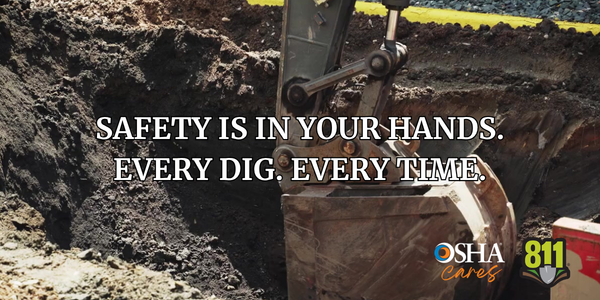
Digging without knowing what’s below the surface may have serious consequences. Hitting a buried utility line while digging can disrupt essential services, lead to costly repairs, or cause serious injuries or fatalities.
That is why the national 811 call-before-you-dig hotline was created. If you’re planning to dig – whether you’re planting a tree, installing a fence, or starting a larger project – contact 811 or visit your state's 811 website a few business days before you begin. Utility companies will mark the approximate location of buried lines with paint or flags so that you don’t unintentionally dig into an underground utility line.
Protect yourself, your colleagues, neighbors, and your community! Contact your 811 center, wait for utilities to respond to your request, and ensure all lines have been marked before putting a shovel in the ground.
DATES TO REMEMBER

August 10-16: Safe & Sound Week
August 30-September 2: VPPPA Safety+ Symposium
September: Suicide Prevention Month
September 11-18: NSC Safety Congress and Expo
September 14-18: Construction Suicide Prevention Week
September 21-25: Farm Safety and Health Week
Do you have a public safety and health event, training, or webinar that you'd like to have featured in QuickTakes? Please share event information with us including the date, time, location, and a short description.
STAY SAFE AND CARRY ON
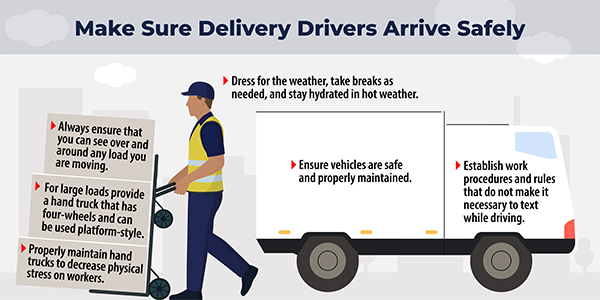
Make Sure Delivery Drivers Arrive Safely
Properly maintain hand trucks to decrease physical stress on workers.
For large loads provide a hand truck that has four-wheels and can be used platform-style.
Always ensure that you can see over and around any load you are moving.
Dress for the weather, take breaks as needed, and stay hydrated in hot weather.
Ensure vehicles are safe and properly maintained.
Establish work procedures and rules that do not make it necessary to text while driving.
CONNECT WITH US
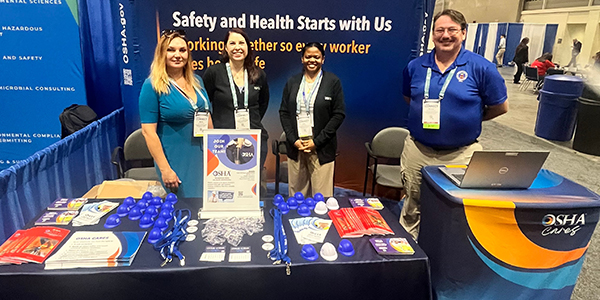
Heading to one of these upcoming safety conferences? If you missed OSHA at the Associated General Contractors conference last month, we will be at two other conferences in the coming weeks and would love to connect with you. If you are attending either of these events, please stop by the OSHA booth and say hello to our team!
- August 30-Septemer 2: Voluntary Protection Programs Participants' Association Safety+ Symposium in Nashville, Tennessee. Visit us at Booth 719.
- September 11-17: National Safety Council Safety Congress and Expo in Indianapolis, Indiana. We're finalizing our booth location, but we'll share it as soon as it's available. We hope to see you there!
PREVENTING TRENCH CAVE-INS
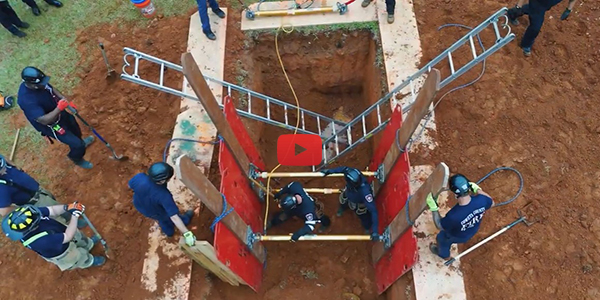
More than 1,300 workers at over 100 jobsites joined the Georgia Utility Contractors Association's (GUCA) Trench & Excavation Safety Stand Down, held in partnership with OSHA. Participants reviewed trench and excavation requirements, learned ways to recognize hazards, and shared best practices to help prevent injuries on the job.
Watch GUCA's trench rescue demonstration video to see why planning, training, and safe work practices can save lives. Visit our website for resources and learn more about keeping workers safe in trenches.
BUILDING SAFETY FROM DAY ONE
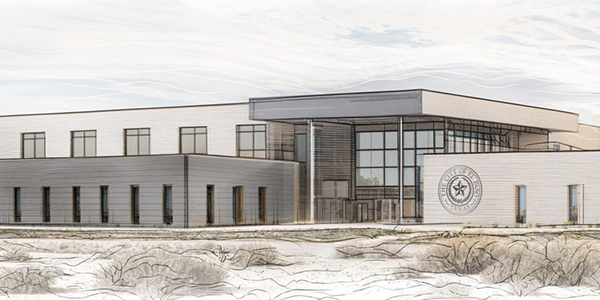
Jordan Foster Construction is partnering with OSHA to help protect approximately 250 workers during the multi-year construction of a 70-acre Public Safety Training Academy Campus in El Paso, Texas.
Through the partnership, workers will receive site-specific safety training in English and Spanish. The company will also conduct regular site-wide safety inspections to identify and correct hazards, address any emerging health concerns during weekly meetings, require subcontractors to follow an approved written safety and health program, and ensure cranes are certified and operated by competent and certified workers.
Once completed, the facility will provide safety training for police and firefighters that will help protect them and the public they serve.
KEEPING SAFETY ON TRACK
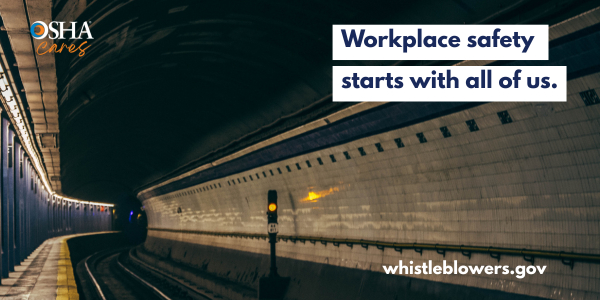
A public transit employee noticed some damage on the tracks that could cause railcars to derail if left unrepaired. After reporting the hazard, the employee's manager said there wasn't time to make repairs because service would be disrupted. The manager then reassigned the employee to the night shift and removed them from rail repair work.
The employee filed a whistleblower complaint with OSHA. An investigation found that the site manager's actions violated the National Transit Systems Security Act, which protects public transportation workers from retaliation for reporting potential safety or security violations. As a result, the employee's original work schedule was restored, and the track damage was reported to the Federal Transit Administration.
This case is a reminder that workplace safety is a shared responsibility. Workers have the right to report safety concerns without fear of retaliation, and speaking up can help prevent serious incidents before they happen. If you believe you were retaliated against for exercising your legal rights, you can file a whistleblower complaint with OSHA.
HOT OFF THE PRESS
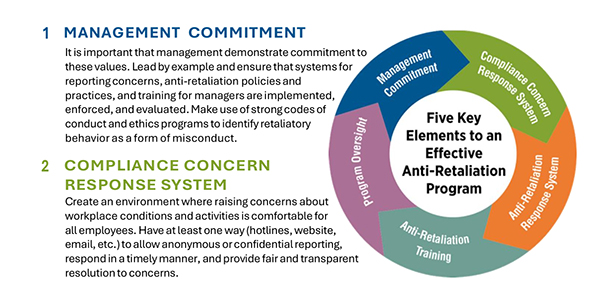
Whether you're training workers, updating your safety program, or wanting access to clear, reliable guidance and information, these new OSHA resources can help.
New publications include:
- Recommended Practices for Anti-Retaliation Programs Fact Sheet (English and Español)
- Protecting you and your co-workers from heat exposure QuickCard (English and Español)
- Best Practices: Fall Protection in Construction (This publication was created through our Alliance with the Elevator Industry Safety Partners.)
Looking for more? Visit our publications webpage to explore hundreds of fact sheets, brochures, booklets and posters that can be downloaded or ordered.
YOU ASK…WE ANSWER

❓ Is it required for a trash collector to wear reflective clothing when they ride on the back of a garbage truck?
🗣️ Yes. If a trash collector rides on the back of a garbage truck, repeatedly crosses streets, or works in dark or low-light conditions, they should be provided with high-visibility reflective clothing to wear on the job.
Although OSHA does not have a specific standard for refuse collection, the General Duty Clause of the OSH Act (Section 5(a)(1)) requires employers to protect workers from recognized hazards, including being struck by vehicles.
Best practice guidance from the National Institute for Occupational Safety and Health and the American National Standards Institute recommends workers who ride on waste trucks or working near roadways wear high-visibility clothing because of the significant risk of struck-by incidents.
WHAT’S TRENDING
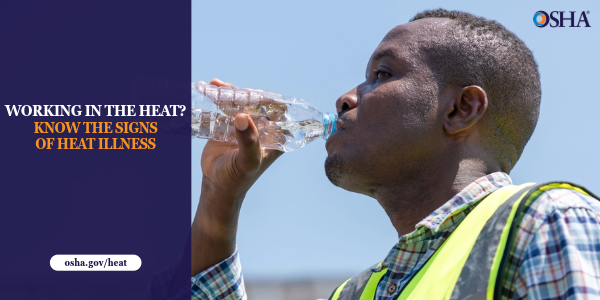
Could you spot the signs of heat illness? When temperatures rise, recognizing the warning signs can help prevent a serious emergency. Watch for heavy sweating, dizziness, nausea, and muscle cramps. These common symptoms may mean someone is overheating and needs immediate attention.
If you or a coworker experiences these symptoms, stop work right away and move to a cooler place. If symptoms are severe or become an emergency, call 911 immediately. Staying alert and acting quickly can save a life. Visit OSHA.gov/heat for ways on how to help prevent heat illness.
We appreciate your commitment to remain informed about what affects the safety and health of America's workers.
You can also read this issue on OSHA's website at osha.gov/quicktakes/080626.


Occupational Safety and Health Administration
200 Constitution Ave. NW, Washington, DC 20210
202-693-1999
You can unsubscribe from this list. (We will miss you!)
QuickTakes subscribers occasionally receive DYK? bulletins about a single timely topic, resource or upcoming event.