


Foodborne Disease
Background
On this page
- Transmission
- Symptoms
- Bacterial Foodborne Pathogens and their Toxins
- Viral Foodborne Pathogens
- Parasitic Foodborne Pathogens
- Prion Disease
- Algal Toxins in Seafood
Transmission
Foodborne illnesses are most commonly spread by consuming contaminated food or beverages or by touching body fluids or surfaces contaminated with feces containing foodborne pathogens and then touching the mouth (swallowing the pathogen by the oral route).
Symptoms
The most common symptoms of foodborne illness are:
- Diarrhea
- Stomach Cramps
- Nausea
- Vomiting
- Fever
The severity of symptoms experienced by an individual from foodborne illness depends on several factors. These include the type and species of pathogen ingested, how much of the organism was ingested, and the general health of the person who ingested the pathogen.
Symptoms can range from very mild to severe and can last hours to days. People with severe symptoms such as bloody diarrhea, diarrhea that lasts more than 3 days, fever of 102°F or higher, continuous vomiting, and signs of dehydration should seek medical help.
Bacterial Foodborne Pathogens and their Toxins
In the United States, consuming contaminated food, especially undercooked meat, or drinking water contaminated with bacteria are common causes of foodborne illness. Some of these bacteria release toxins, or poisons, that can worsen diarrhea or vomiting and may cause other serious complications (Table 1).
Salmonella species, for example, are present in about one in 25 packages of raw chicken sold at grocery stores. Likewise, illness from Campylobacter is most often caused by eating undercooked poultry and sometimes raw vegetables (such as those in salads) which have become contaminated during preparation on surfaces such as a cutting board that was used previously for raw meat. In addition, bacteria such as E. Coli can contaminate groundwater via agricultural runoff from animal farming activity. This contaminated water can then affect the soil where fruit and vegetables are grown. While washing produce may remove some contaminants, certain pathogens can adhere to rough or creviced surfaces such as the rind of a cantaloupe, or grow inside porous, leafy vegetables like romaine lettuce.
| Bacteria | Source | Symptoms | Onset | Toxin |
|---|---|---|---|---|
| Campylobacter | Undercooked poultry, meat, or shellfish; raw milk; contaminated water. | Diarrhea (can be bloody), cramping, abdominal pain, and fever. | 2-5 days after ingestion. | ---- |
| Clostridium botulinum | Improperly canned food; foods packed in oil; soil. | Double or blurred vision, slurred speech, difficulty swallowing, drooping eyelids and muscle weakness. | Usually 12 to 36 hours but can be between 4 hours and 8 days after ingestion. |
Botulinum toxin (BT). Causes paralysis. |
| Clostridium perfringens | Meats, meat products, and gravy that are left at room temperature. | Abdominal cramps, nausea, diarrhea. | 6 to 24 hours after ingestion. |
C. perfringes enterotoxin (CPE.) Causes diarrhea. |
| Escherichia coli (E. coli) 0157:H7 and other strains | Raw or undercooked (ground) beef; raw milk and unpasteurized juices; contaminated fresh fruits and vegetables; contaminated water. | Severe, often bloody diarrhea; abdominal cramps; vomiting. | Usually 2-5 days after ingestion. |
Shiga toxin (Stx) Found on Shiga toxin-producing E. coli (STEC) only. Can worsen symptoms and lead to Hemolytic Uremic Syndrome (HUS), which damages red blood cells and can cause kidney failure and death. |
| Listeria monocytogenes | Deli meats (hot dogs, cold cuts, dry sausage) and prepared salads made with these meats or seafood; soft, fresh (unpasteurized or aged) cheeses; ice cream. | Fever; muscle aches, nausea or diarrhea. Can cause severe illness including complications in pregnancy or spread to the nervous system. |
Less than 24 hours after ingestion for intestinal illness (diarrhea and vomiting only). Usually 14 days after ingestion for severe illness (can be between 3 and 70 days). |
---- |
| Salmonella serotypes (non-typhoidal)* | Raw or undercooked poultry, meat, and eggs; raw milk and unpasteurized juices; cheese and seafood; contaminated fresh fruits and vegetables. | Abdominal cramps, watery diarrhea, nausea, vomiting, and loss of appetite. | 6 hours to 6 days after ingestion. |
Lipopolysaccharide (LPS). Can cause both diarrhea and vomiting. |
| Shigella species (S. sonnei, flexneri, boydii, and dysenteriae) |
Unpasteurized milk, contaminated produce, ready-to-eat foods (salads, deli meats and sandwiches), prepared by people with unwashed hands; people with Shigella and contaminated surfaces; | Watery or bloody diarrhea, fever, abdominal cramps. | 1 to 2 days after ingestion. |
Stx (Shigella dysenteriae species only.) Can cause severe, sometimes bloody diarrhea and lead to HUS. |
| Staphylococcus aureus | Milk and cheese; ready-to-eat foods (salads, deli meats, pastries and puddings), prepared by people with unwashed hands and improperly stored. | Nausea, abdominal cramps, vomiting, and diarrhea. | 30 minutes to 8 hours after ingestion. |
S. aureus enterotoxin A (SEA). Causes nausea, vomiting, and sometimes diarrhea. |
| Vibrio cholerae (cholera)† | Fresh, brackish (slightly salty), and marine water; shellfish; people with cholera and food they prepare; contaminated surfaces | Abdominal cramps, pale gray stool or watery diarrhea called “rice water” with a fishy odor | 12 hours to 15 days after ingestion. |
Cholera toxin (CT) Exotoxin. Causes severe diarrhea and vomiting. |
| Vibrio vulnificus and other species | Raw shellfish (oysters) and seafood. | Diarrhea, stomach pain, and vomiting. | 1-3 days after ingestion. | ____ |
| Yersinia enterocolitica | Undercooked pork products (chitterlings, sausages); infected people and other animals. | Fever, abdominal pain on right side, diarrhea (often bloody), vomiting, and sore throat. | 4-7 days after ingestion. |
Yersinia stable toxin (YST). Causes diarrhea and can survive boiling for 10 minutes. |
*Salmonella typhi, the bacteria that cause typhoid fever, is not considered a foodborne illness.
†Cholera is no longer considered endemic in the United States.
Sources: USDA: What You need to Know about Foodborne Illnesses, CDC: Facts About food Poisoning
Viral Foodborne Pathogens
Foodborne viruses are easily spread from person to person. Like bacteria, they can spread via the fecal-oral route but can also spread via saliva (talking, sneezing or coughing, etc.). They can be spread from water or food contaminated with agricultural runoff or sewage but do not grow in food like bacteria. Instead, large numbers of viral particles are shed from infected people onto surfaces and in food and beverages where they can survive and remain infective for days or weeks before entering a host.
The most common cause of foodborne illness in the United States is Norovirus, also known as Norwalk virus. Norovirus is estimated to cause illness in over 5 million people and almost 23,000 hospitalizations every year.
Because norovirus is highly contagious, it sickens many people in congregate settings where people have close contact and use the same food and water sources. Illnesses from norovirus occur frequently on cruise ships, in hospitals and nursing homes, and in childcare facilities. Norovirus transmission on cruise ships has become a frequent cause of concern among travelers, cruise line industry leaders, and public health professionals.
Symptoms of most foodborne viruses are similar to those of foodborne bacteria and may include nausea, vomiting, stomach pain or cramps, and diarrhea, fever, malaise, and muscle aches. Treatment for foodborne viruses generally includes hydration and symptom management because these illnesses are self-limiting, meaning that they go away on their own.
Exceptions are Hepatitis A virus (HAV), Hepatitis E virus (HEV), and poliovirus (polio), described in Table 2. These viruses are considered self-limiting but can result in severe and debilitating disease. There are, however, vaccines to prevent both polio and Hepatitis A.
| Virus | Source | Symptoms | Onset |
|---|---|---|---|
| Hepatitis A (HAV) | Close contact with or eating food prepared by a person who is infected. | Can be asymptomatic. When present, symptoms may include one or more of the following: Dark urine, diarrhea, clay-colored stools, fatigue, fever, nausea, joint pain, itching, jaundice (yellowing of the skin and whites of eyes). | 2-7 weeks after exposure. |
| Hepatitis E (HEV) | Undercooked shellfish, pork, and game; contact with a person who is infected. | Can be asymptomatic. When present, symptoms are the same symptoms as HAV. | 2-6 weeks after exposure. |
| Norovirus | Drinking water from a contaminated source, close contact or eating food prepared by a person who is infected, contact with contaminated surfaces. | Nausea, vomiting, stomach pain or cramps, and diarrhea; sometimes fever, malaise and muscle aches. | 1-4 days after exposure. |
| Rotavirus | Close contact with people, especially infants and children with diarrhea who are infected, contaminated surfaces. | Watery diarrhea, stomach cramps, nausea, vomiting, and fever (usually mild in adults). | 1-3 days after exposure. |
| Sapovirus | Contact with a person who is infected, undercooked shellfish. | Gastroenteritis, nausea, vomiting; diarrhea. | 12 hours to 4 days after exposure. |
| Poliovirus* | Contaminated food and water, contact with an infected person including their respiratory droplets. | Asymptomatic, or mild illness (nausea and vomiting, fever, headache, fatigue). Can be severe, causing muscle weakness or paralysis with numbness or tingling, difficulty standing or walking loss of reflexes, drooling or trouble swallowing, or respiratory paralysis. | 3 to 6 days after exposure for nonparalytic type; 7 to 21 days for paralytic poliomyelitis. |
Parasitic Foodborne Pathogens
In the United States, foodborne illnesses caused by parasites are less common than those caused by bacteria and viruses, and although symptoms (nausea, vomiting, diarrhea, and others) may be similar, they often develop more slowly. Parasitic infections are also harder to detect in clinical settings and often go undiagnosed or are misdiagnosed. In addition, detection of parasites is not included in routine food safety screenings, but instead is targeted at high-risk, imported food products.
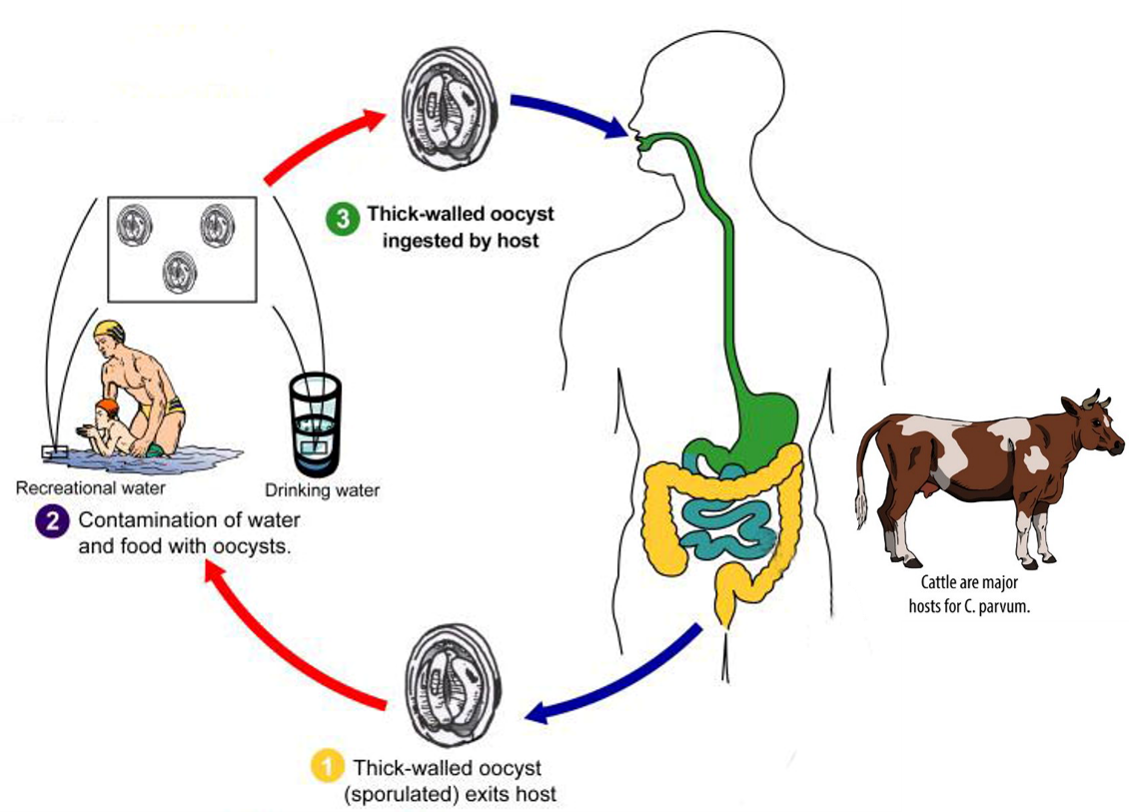
Two of the most common foodborne parasites are the single-celled species, Cryptosporidium and Toxoplasma gondii (Figure 1A and 1B). Both have complex life cycles that consist of several life stages. Some parasites, including Toxoplasma require an animal or insect as intermediate host in order to fully develop. Other important foodborne parasites are shown in Table 3.
Figure 1. Life cycles of two common foodborne parasitic diseases in the United States
- Cryptosporidium. Humans are the primary hosts for Cryptosporidium hominus while cows and other ruminants (hooved herbivores) are primary hosts for C. parvum, but many other mammals and birds can be infected. Infection in humans begins with ingestion of water or food contaminated with feces containing Cryptosporidium eggs (oocysts). Once infected, humans and animals pass the parasitic eggs in their stool (1), perpetuating the cycle (2, 3). Cryptosporidiosis, the resulting disease, can be severe and include stomach cramps; frequent, watery diarrhea; dehydration; and weight loss.
- Toxoplasma gondii. Cats (1) are the primary hosts for T. gondii. Animals (mice, sheep, pigs and other mammals) exposed to parasite-infected cat feces can swallow the eggs. The animals are then infected, and the eggs mature and rapidly divide in their body forming cysts in their muscle tissue. Cats become infected when they eat infected mice, perpetuating the cycle. Humans who eat undercooked pork, lamb or other meat containing Toxoplasma cysts can acquire the Toxoplasma infection (2), as can people who have direct contact with infected cat feces (e.g., while cleaning litter boxes) (3). Finally, women who are pregnant can pass Toxoplasma though the placenta to their unborn child resulting in congenital toxoplasmosis, a disease that can cause premature birth, birth defects such as loss of sight, and long-term brain damage.
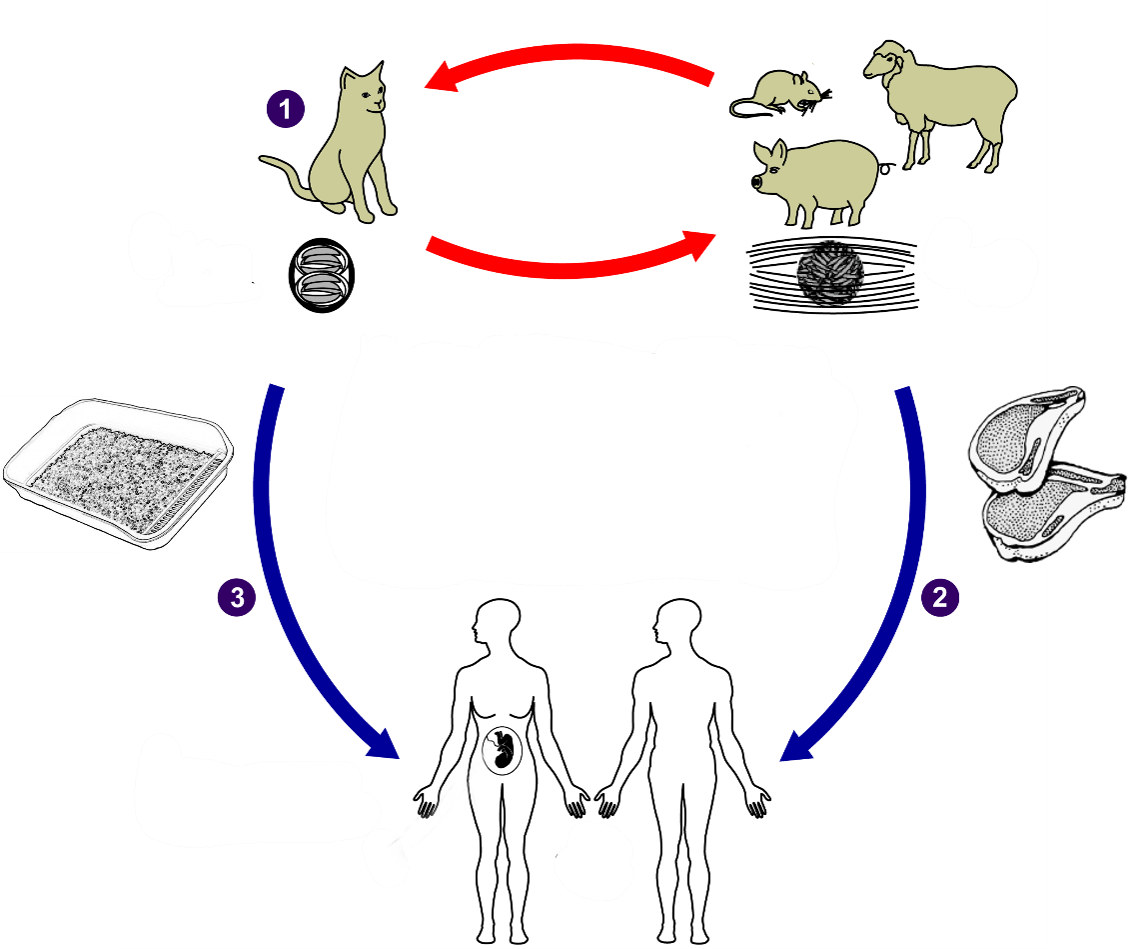
Figures 1A and 1B were modified from the Public Health Image Library (PHIL), CDC.
| Parasite | Source | Symptoms | Treatment |
|---|---|---|---|
| Ascaris (R) |
Improperly washed plant foods that have been in contact with human waste, infected people. Note: Ascaris infects lungs initially and are coughed up and swallowed. Adult worms are 30 cm long and can migrate out of mouth and nose in heavy infections. |
Early infection: dry cough, chest pain, fever. Late infection: mild to severe abdominal pain and cramping, nausea, diarrhea, weight loss, abdominal swelling, passage of worms in vomit or stool. |
Antiparasitic drugs; surgery possible in heavy infections causing blockage. |
| Cryptosporidium (S) | Untreated surface water (streams, lakes, etc.); infected people or animals | Frequent, watery diarrhea, cramping, abdominal pain; in severe cases, dehydration and weight loss. | Rehydration and symptom relief (can resolve on its own) or antiparasitic drugs in severe cases. |
| Cyclospora (S) | Imported fresh produce, especially soft fruits (berries), herbs (cilantro, basil), leafy greens (ready to eat salads) and other raw vegetables | Watery, sometimes explosive diarrhea, abdominal discomfort. | Antibiotics. |
| Echinococcus (T) | Dogs and farm livestock (handling fur and feces), wild-harvested berries, herbs, greens, unwashed vegetables that are grown in endemic areas | Nausea, vomiting, coughing; discomfort and/or pain in lungs or liver from cysts; rupture of cysts may cause death. | Antiparasitic medication, puncture and drainage of cysts; surgery may be needed. |
| Giardia (S) | Untreated surface water (streams, lakes, etc.), leafy greens, infected people | Diarrhea, gas, smelly and greasy poop, cramping, abdominal pain, nausea. | Antiparasitic drugs but can resolve on its own. |
| Taenia solium (T) | Undercooked pork; ingestion of eggs from tapeworm carrier or by fecal-oral self-infection |
Tapeworm (taeniasis): intestinal discomfort, potential puncture of intestinal wall. Larvae (cysticercosis): cystic lesions. When in brain, headache, dizziness, confusion, seizures, sometimes coma and death. |
Antiparasitic drugs, steroids; anti-seizure medications, shunting or neurosurgery may be necessary. |
| Trichinella (R) | Undercooked, uninspected meats, especially wild game |
Early infection: nausea, vomiting, diarrhea, and abdominal pain. Late infection: cystic lesions, fever, headache, muscle and joint pain, weakness, facial swelling; pink eye, light sensitivity. |
Antiparasitic drugs. |
| Trypanosoma cruzi (Chagas disease)* (S) | Fruit juices (palm wine, sugarcane, and others) and any food contaminated with kissing bugs or their feces |
Fever, fatigue, body aches, rash, swollen eyelids. If untreated, can cause organ enlargement (esophagus, colon, heart), heart disease. |
Antiparasitic drugs. If chronic, cardiac medications, pacemakers, and sometimes surgery. |
Prion Disease
Variant Creutzfeldt-Jakob Disease (vCJD) is a very rare form of prion illness that can be acquired from ingesting beef from cattle with Bovine Spongiform Encephalopathy (BSE), otherwise known as “mad cow disease”. Prions are misfolded proteins that can trigger misfolding of other proteins in the brain. Ingesting infected meat can cause development of vCJD, the variant (human) form of BSE, which primarily affects young adults.
Most known cases of vCJD have occurred in the United Kingdom, but cases have occurred in other parts of the world, including four cases in the United States. Three of the four U.S. patients with vCJD were known to have contracted it outside of the country, and it is considered likely that the fourth patient also contracted vCJD abroad. BSE is now very rarely found in cows, so well-cooked beef in any country is considered to be free of the disease.
Algal Toxins in Seafood
Fish and shellfish that inhabit both fresh and saltwater consume algae as a regular part of their diet. These algae may contain toxins, particularly during algal blooms. Eating fish or shellfish that are wild caught (not commercially produced) during periods of algal blooms poses a serious risk to health. The toxins in algae are not pathogenic or communicable but are poisonous when eaten and result in Harmful Algal Bloom (HAB)-associated illness that can cause serious damage to organs and even death.
For more information about HAB-associated illness, See CDC’s websites: