


Flood Infographics
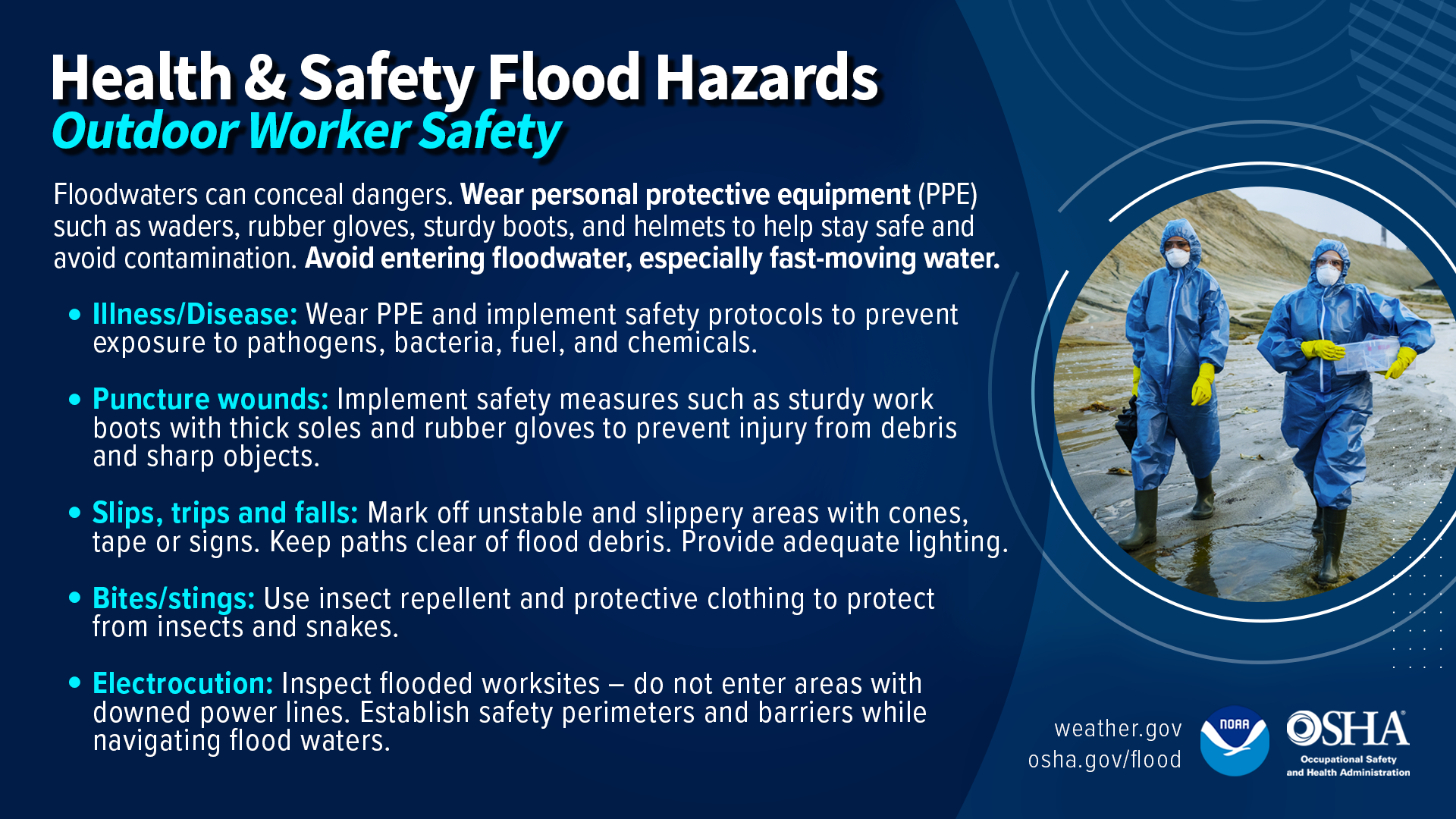
Health & Safety Flood Hazards; Outdoor Worker Safety
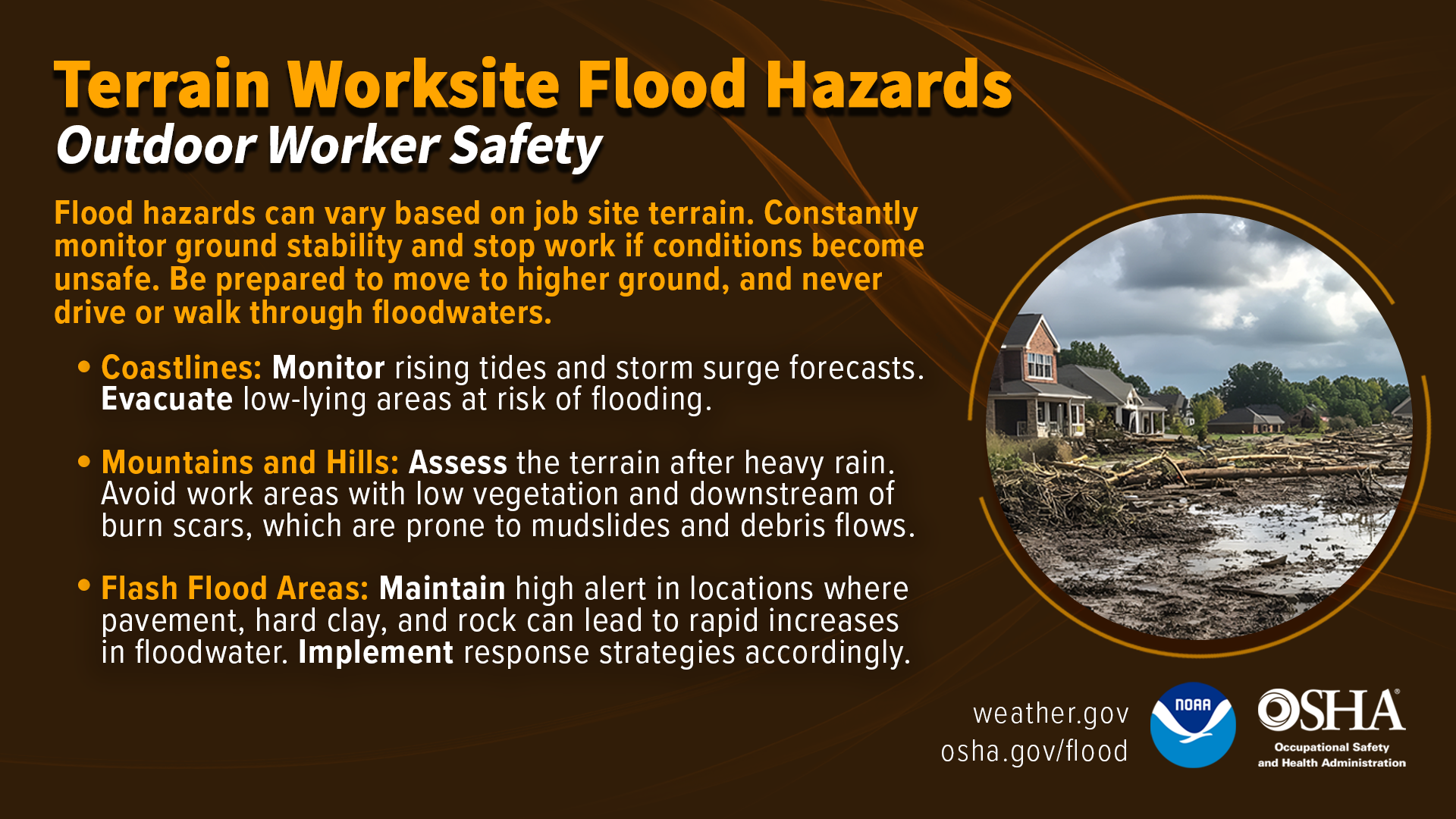
Terrain Worksite Flood Hazards; Outdoor Worker Safety
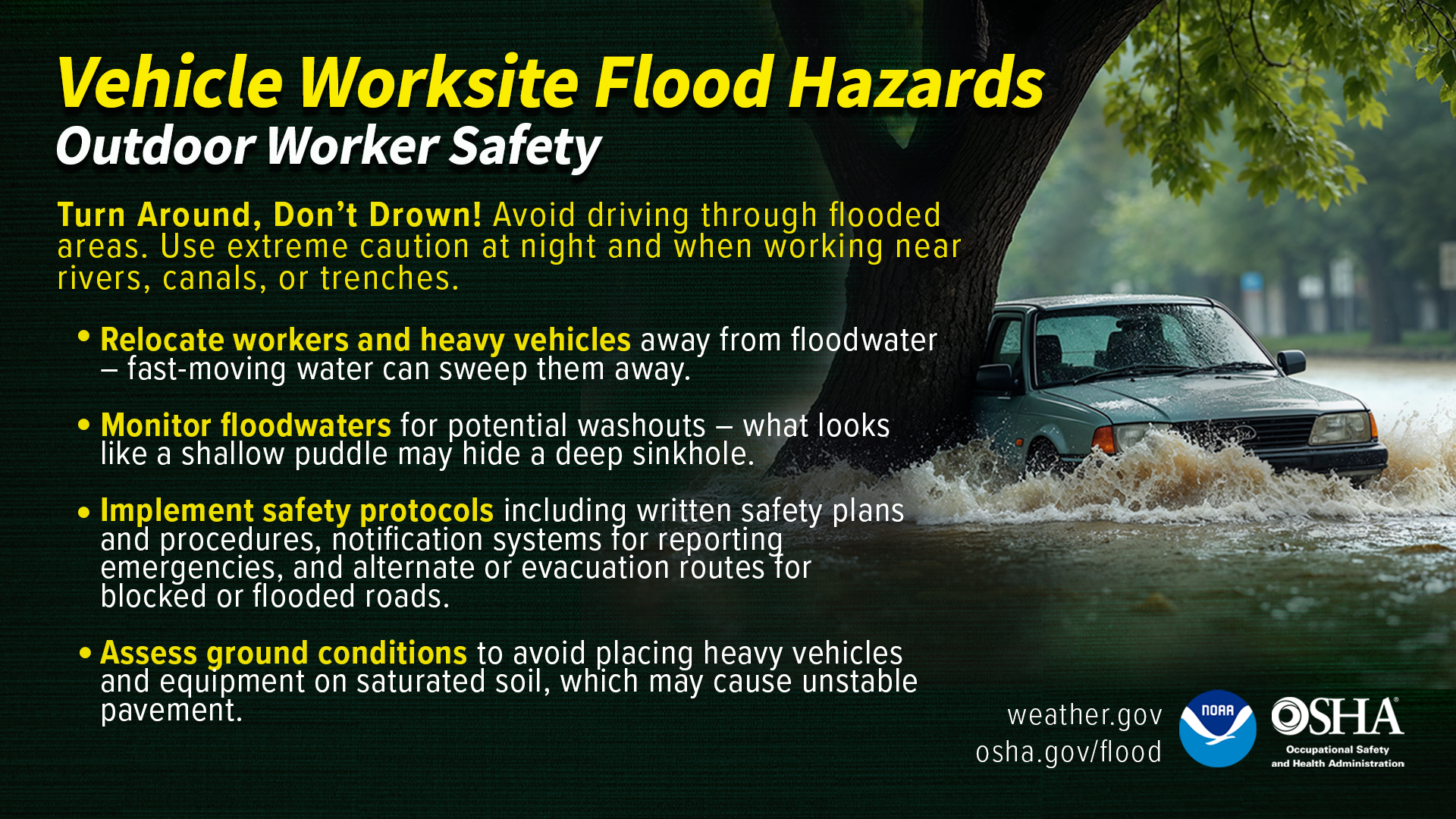
Vehicle Worksite Flood Hazards; Outdoor Worker Safety
Infographic with a photo two people wearing full-body blue protective PPE suits. Health & Safety Flood Hazards - Outdoor Worker Safety Floodwaters can conceal dangers. Wear personal protective equipment (PPE) such as waders, rubber gloves, sturdy boots, and helmets to help stay safe and avoid contamination. Avoid entering floodwater, especially fast-moving water. Illness/Disease: Wear PPE and implement safety protocols to prevent exposure to pathogens, bacteria, fuel, and chemicals. Puncture wounds: Implement safety measures such as sturdy work boots with thick soles and rubber gloves to prevent injury from debris and sharp objects. Slips, trips and falls: Mark off unstable and slippery areas with cones, tape or signs. Keep paths clear of flood debris. Provide adequate lighting. Bites/stings: Use insect repellent and protective clothing to protect from insects and snakes. Electrocution: Inspect flooded worksites—do not enter areas with downed power lines. Establish safety perimeters and barriers while navigating flood waters.
Infographic with a photo of a residential neighborhood that has been heavily impacted by flooding, including fallen trees. Terrain Worksite Flood Hazards - Outdoor Worker Safety Flood hazards can vary based on job site terrain. Constantly monitor ground stability and stop work if conditions become unsafe. Be prepared to move to higher ground, and never drive or walk through floodwaters. Coastlines: Monitor rising tides and storm surge forecasts. Evacuate low-lying areas at risk of flooding. Mountains and Hills: Assess the terrain after heavy rain. Avoid work areas with low vegetation and downstream of burn scars, which are prone to mudslides and debris flows. Flash Flood Areas: Maintain high alert in locations where pavement, hard clay, and rock can lead to rapid increases in floodwater. Implement response strategies accordingly.
Infographic with a photo of a car driving through a flooded roadway. Vehicle Worksite Flood Hazards - Outdoor Worker Safety Turn Around, Don’t Drown! Avoid driving through flooded areas. Use extreme caution at night and when working near rivers, canals, or trenches. Relocate workers and heavy vehicles away from floodwater – fast-moving water can sweep them away. Monitor floodwaters for potential washouts – what looks like a shallow puddle may hide a deep sinkhole. Implement safety protocols including written safety plans and procedures, notification systems for reporting emergencies, and alternate or evacuation routes for blocked or flooded roads. Assess ground conditions to avoid placing heavy vehicles and equipment on saturated soil, which may cause unstable pavement.