


QuickTakes Newsletter
March 19, 2026
OSHA CARES
OSHA CARES is our agency-wide initiative that focuses on prevention by helping businesses meet federal requirements while building stronger, more successful safety and health programs that benefit both employers and workers.
OSHA Cares will highlight the ways OSHA can support employers and provide guidance to ensure all workers arrive home safely after every shift. We want to encourage businesses to come to us for assistance or guidance to improve safety and health at their worksite. We are also making a concerted effort to show businesses that the agency is more approachable by emphasizing the benefits of reaching out for help or collaborating with the agency.
We want to empower employers to improve workplace safety – particularly small and medium-sized businesses who face unique safety and health challenges – by increasing access to OSHA experts and compliance assistance specialists; improving access to educational and training materials; and offering consistent workplace assistance during enforcement visits and meetings.
OSHA values working closely with businesses, listening to stakeholders, building greater collaboration, and expanding compliance assistance to give employers the tools and knowledge to develop or build on a safety and health program. The agency’s Directorate of Enforcement Programs is launching a training program that will standardize how the agency’s Compliance Safety and Health Officers will offer real time assistance during inspections and enforcement activities.
BECOME A SAFETY CHAMPION
This week we introduced our new Safety Champions Program, an initiative that aims to meet businesses where they are on their pathway to safety and health success and encourages them to take proactive steps for continuous improvement to prevent workplace injuries, illnesses, and fatalities.
Safety Champions has three progressive steps: Introductory, Intermediate, and Advanced. This tiered structure allows employers to build their safety and health programs over time and adopt best practices tailored to their needs and operations.
Participants can choose to work independently or collaborate with Special Government Employees – individuals with safety and health experience who work alongside OSHA to provide guidance and technical assistance.
Sign up to embark on your pathway to safety and health success!
A MESSAGE ON TRENCH SAFETY
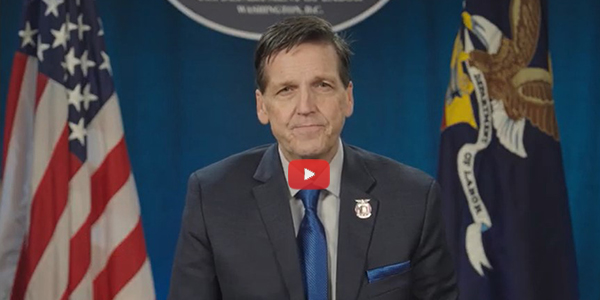
OSHA Assistant Secretary Dave Keeling is reminding employers and workers that trench safety can help save lives. We offer valuable resources to help protect America’s workers, including training and free consultation services to prevent tragedies before they happen.
WE’RE HIRING!
Are you interested in coming to work every day knowing that your job is protecting workers and saving lives? If so, that’s great. Because we are looking for talented, mission-driven individuals who want to use their skills in service of something bigger than themselves.
Want to join the team? We have some exciting new opportunities:
- Safety and Occupational Health Specialists
- Industrial Hygienists
- Safety Engineers
- Safety Technicians
- Management and Program Analysts
Apply today at osha.gov/careers or register to attend our April 2 Virtual Career Fair.
Veterans may be eligible for Special Hiring Authorities.
DATES TO REMEMBER

February 1 - April 30: Employers must keep their 300A summary of workplace injuries and illnesses recorded in 2025 posted where it will be visible to all employees.
March 30-April 3: Stand Up 4 Grain Safety
April 2: OSHA Virtual Career Fair
April 7: Work Zone Traffic Safety Planning for Supervisors webinar
April 8: OSHA and Wage and Hour Division Compliance Tools webinar
April 20-24: Workers Memorial Day Events
May 4-8: National Safety Stand-Down to Prevent Falls
Do you have a public safety and health event, training, or webinar that you’d like to have featured in QuickTakes? Please share event information with us including the date, time, location, and a short description.
COLLABORATION IN ACTION
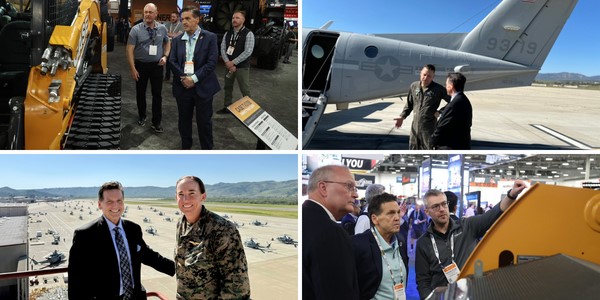
OSHA Assistant Secretary Dave Keeling recently had the opportunity to visit the Marine Corps Air Station Camp Pendleton, to meet their team and see firsthand what a strong safety culture looks like in action. Assistant Secretary Keeling met with Col. Judy Houser and her team to discuss future collaboration and toured the air station to see how the Marine Corps was advancing safety and health practices.
The Assistant Secretary also attended the ConExpo-Con/Agg, where leaders from across the construction industry came together. From exploring emerging technologies to exchanging ideas on improving safety and health, the conversations were insightful and forward-looking.
Together, these visits reinforce a shared commitment by OSHA and stakeholders to put America’s workers first – and highlight the power of collaboration in building safer, stronger workplaces.
OSHA’S SAFETY TOOLBOX
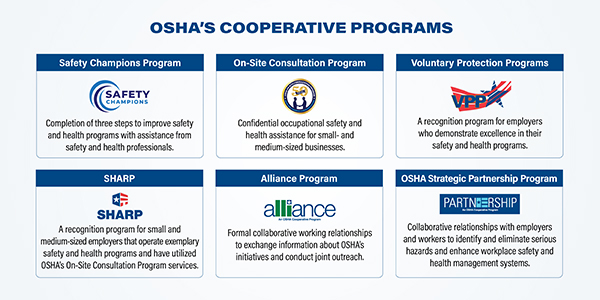
OSHA offers no-cost cooperative programs to help organizations prevent workplace fatalities, injuries, and illnesses. These programs are open to trade and professional associations, businesses, industry groups, unions, and community- and faith-based organizations. All of our cooperative programs are designed to help you build or improve effective safety and health programs.
If you are located in a state with an OSHA-approved State Plan, please contact your state agency for information about cooperative programs.
OSHA's Cooperative Programs
Safety Champions Program
Completion of three steps to improve safety and health programs with assistance from safety and health professionals.
On-Site Consultation Program
Confidential occupational safety and health assistance from small and medium size businesses.
Voluntary Protection Program
A recognition program for employers who demonstrate excellence in their safety and health programs.
SHARP
A recognition program from small and medium-sized employers that operate exemplary safety and health programs and have utilized OSHA's On-Site Consultation Program service.
Alliance Program
Formal collaborative working relationships to exchange information about OSHA's initiatives and conduct joint outreach.
OSHA Strategic Partnership Program
Collaborative relationships with employers and workers to identify and eliminate serious hazards and enhance workplace safety and health management systems.
THE NEXT GENERATION OF SAFETY LEADERS

OSHA's Alliance and Safe + Sound partner CareerSafe is bringing the Safe + Sound initiative into classrooms through Safe + Sound in School Week 2026, taking place April 20 through May 1.
The campaign encourages educators to host a short Hazard Huddle with their students. During the discussion, students explore real workplace hazards, learn about their rights as young workers, and practice speaking up about safety concerns.
Classes that participate can share photos or highlights from their Hazard Huddle to receive a classroom certificate and be entered into a drawing for a classroom pizza party sponsored by CareerSafe, as well as a virtual visit from OSHA leadership
Educators can register here to participate in Safe + Sound in School Week 2026. They can also find program instructions and free classroom resources at keepteenworkerssafe.org.
SIMPLE SOLUTIONS TO KNOWN HAZARDS
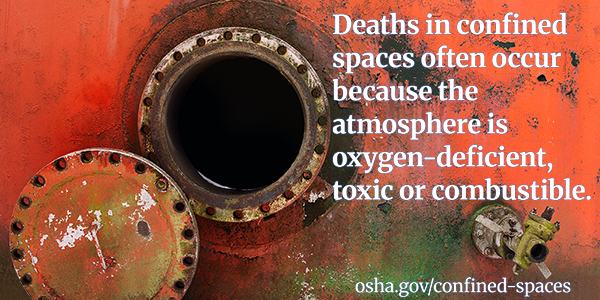
Several preventable safety failures led to a worker at a Florida petroleum company succumbing to toxic chemical fumes inside a fuel storage tank. The business now faces 12 serious violations and the devastating repercussions of a worker’s lost life. This could have been prevented by following required, long-established and proven-effective safety measures, such as ensuring that workers have permits to enter hazardous confined spaces, that they know the dangers, and that they recognize signs or symptoms of exposure. Other safeguards not followed included testing the air in the space before allowing anyone to enter it, not having and following a written respiratory program, and not implementing a hazard communication program. Visit our website to learn more about keeping workers safe in confined spaces.
PARTNERING TO PROTECT WORKERS
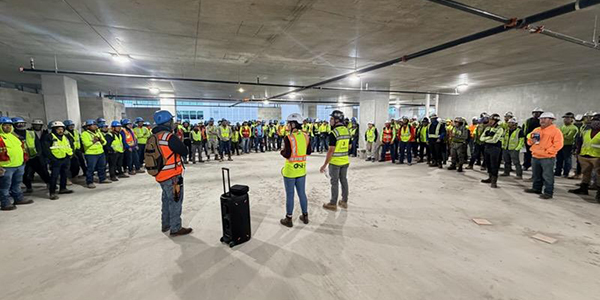
Last month, 235 workers with Juneau Construction and its subcontractors gathered at the site of a condominium construction project in Florida for a hands-on toolbox talk focused on fall protection, presented by staff from an area OSHA office. This outreach is part of a broader effort under our formal partnership with Juneau to help ensure the safety and health of the workers during the length of this project with a massive scale that brings significant workforce complexity and significant risk.
The partnership was designed to meet that challenge head-on with goals include reducing injury and illness rates to at least 10% below the national average for non-residential building construction, enhancing safety training and building comprehensive safety and health programs modeled on OSHA's Safe + Sound framework.
Critically, the partnership places special emphasis on reaching subcontractors — many of them small businesses that might not otherwise have access to safety resources in a high-hazard industry.
Visit our website to learn more about OSHA's Strategic Partnership Program.
SAFETY AT EVERY LEVEL

Being safe at work means feeling safe to speak up about workplace hazards without losing your job or facing other retaliation from your employer. Employers who create an environment in which workers feel comfortable voicing their safety concerns build trust and foster a more productive workplace by using the hands-on experience of their employees to better prevent incidents that can result in an injury, illness, or fatality. We are here to protect the rights of workers to engage in activities such as filing a safety or health complaint, asking questions or expressing concerns, reporting a work-related injury or illness, or requesting copies of OSHA regulations. Contact OSHA if you believe you have been retaliated against for these or related actions.
YOU ASK...WE ANSWER
Q: What is a "permit-required confined space"?
Many workplaces have areas that are considered "confined spaces" because while they are not necessarily designed for people, they are large enough for workers to enter and perform certain jobs. These spaces often have limited or restricted ways to enter or exit and are not meant for continuous use. Examples include, but are not limited to, tanks, vessels, silos, storage bins, hoppers, vaults, pits, manholes, tunnels, equipment housings, ductwork, and pipelines.
Some confined spaces are especially dangerous. OSHA calls these "permit-required confined space” (permit space). These spaces may:
- contain or potentially contain hazardous air;
- have materials that can potentially engulf someone inside;
- have walls that converge inward or floors that slope downward and taper into a smaller area that could trap or suffocate someone;
- or include other serious safety or health hazards, such as unguarded machinery, exposed live wires, or heat exposure.
Workers can only enter a permit space if they have proper training and a permit that confirms safety steps are in place.
WHAT’S TRENDING
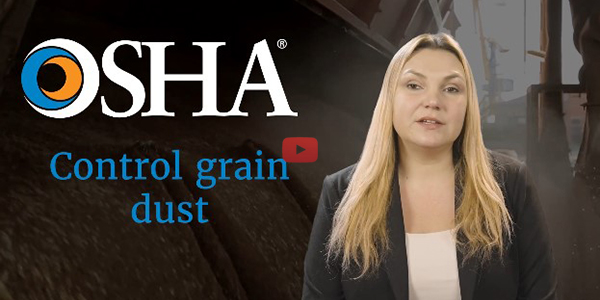
Have a minute? Watch this short video to learn seven keys to grain handling safety.
We appreciate your commitment to keeping informed about that affect the safety and health of America's workers.


Occupational Safety and Health Administration
200 Constitution Ave. NW, Washington, DC 20210
202-693-1999
You can unsubscribe from this list. (We will miss you!)
QuickTakes subscribers occasionally receive DYK? bulletins about a single timely topic, resource or upcoming event.