


Directorate of Technical Support and
Emergency Management
The Directorate of Technical Support and Emergency Management (DTSEM) includes offices located in the National Office along with the OSHA Technical Center. DTSEM provides special expertise in a number of areas to ensure that OSHA's capabilities are state-of-the-art with regard to occupational safety and health. These areas include:
- industrial hygiene,
- safety engineering,
- occupational medicine and nursing,
- sample analysis and equipment calibration and repair,
- emergency preparedness and response,
- ergonomics,
- statistical analysis, and
- technical data services.
Experts in these areas are used by the Agency to supplement other program staff by providing specialized technical expertise and advice. The wide range of expertise and services available in DTSEM results in our being involved in every major program area of the Agency, as well as in compliance assistance and outreach activities. Implementation of our Directorate's programs provides support, service, and solutions for the rest of OSHA.
Director and Office Information
Lee Anne Jillings, Director
Daniel Johansen, Deputy Director
Contact Us
U.S. Department of Labor/OSHA - DTSEM
200 Constitution Ave., N.W., Room N3653
Washington, DC 20210
(202) 693-2300

Common Respiratory Illnesses
Protect workers from exposure to common respiratory viruses including Influenza, COVID-19, and RSV when they are circulating in the community.

Injury Tracking Application (ITA) Data:
Establishment and Case Detail Work-related Injury and Illness Data

Injury Tracking Application
The deadline for covered employers to report from their OSHA Form 300A is March 2 of the year after the calendar year covered by form. Information must be reported electronically through OSHA’s Injury tracking Application. This can be accessed from the ITA Launch Page. To learn more about OSHA’s occupational injury and illness data reporting requirements, including who, what, and how, start here:

Recordkeeping
Keeping records of serious work-related injuries and illnesses helps employers to understand hazards in their establishments and to act to reduce and eliminate those hazards. Because OSHA’s recordkeeping requirements can be complicated, however, OSHA offers general and detailed guidance on the requirements; provides a question and answer tool; and has published Letters of Interpretation to help employers keep accurate records. To explore these pages and more, start here:
Severe Injury Reports
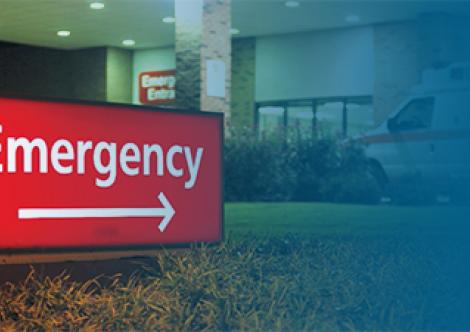
OSHA collects information about every work-related fatality and every work-related amputation, loss of an eye, or hospitalization.The information collected includes information about the time and place of the event as well as a description of the event itself. These data allow OSHA to focus its efforts more effectively to prevent fatalities and serious work-related injuries and illnesses. Federal OSHA data are also available to employers, employees, and researchers to use to make workplaces safer and healthier. Interested in learning more? You can access these data here:
Selected OSHA Products and Publications
DTSEM led the development of the following OSHA resources:
- Common Respiratory Illnesses. Safety and Health Topics Page, (February 2026)
- Hearing Protector Fit Testing: Ensuring Appropriate Noise Protection at Work Safety and Health Information Bulletin (SHIB) (February 2026)
- Chlorine. OSHA method update (January 2026).
- Nitric Oxide. OSHA method update (January 2026).
- Measles. Safety and Health Topics Page (Updated), (August 2025).
- Medical Screening and Surveillance Requirements Guide.
- Noise. Safety and Health Topics Page (Updated), (June 2025).
- Carbon Monoxide. OSHA method update (October 2024).
- Carbon Dioxide. OSHA method update (October 2024).
- TitanX Engine Cooling Inc. Success Story.
- Ducommun Aerostructures New York, Inc. Success Story.
- Methylene Chloride. OSHA method update (September 2024).
- Missouri Slope Lutheran Care Center Success Story and Case Study.
- Ebola. Safety and Health Topics Page (Updated), (April 2024)
- Injury Tracking Application Data. (April 2024)
- Tickborne Disease. Safety and Health Topics Page, (February 2024)
- Workplace Mental Health. Fact Sheet, (January 2024). (Español)
- OSHA Technical Manual (OTM) Section II: Chapter 1, Personal Sampling for Air Contaminants. (September 2023).
- Seasonal Influenza (Flu). Fact Sheet, (August 2023).
- Methylene Chloride Small Entity Compliance Guide Fact Sheets. (Updated), (July 2023).
- Ergonomics. Safety and Health Topics Page (Updated), (June 2023).
- Valley Fever. Safety and Health Topics Page, (March 2023).
- Mpox/Monkeypox Virus. Fact Sheet (January 2023). (Español)
- Seasonal Flu. Safety and Health Topics Page (Updated), (November 2022).
- Reducing the Risk of Worker Exposure to Disease-Carrying Ticks. Fact Sheet, (September 2022). (Español)
- Avian Influenza (Bird Flu). Fact Sheet, (August 2022). (Español)
- Avian Influenza (Update). Safety and Health Topics Page, (August 2022).
- OSHA Technical Manual (OTM) Section III: Chapter 5, Noise. (July 2022).
- Warehousing (Update). Safety and Health Topics Page, (February 2022).
- Improving Workplace Ventilation During Cold Weather. OSHA Alert, (February 2022).
DTSEM Programs
-
Provides updated guidance on how to evaluate employers' use of clinical laboratories for employee blood lead testing under the general industry [Lead Standard] (29 CFR 1910.1025(j)(2)(iii)) and the construction Lead Standard (29 CFR 1926.62(j)(2)(iii)).
-
Represents records of the OSHA Technical Center sampling information system from 1984 forward. Includes data on personal, area, and bulk samples for various airborne contaminants.
-
Emergency Preparedness and Response
Provides information on how to prepare and train for emergencies and the hazards to be aware of when an emergency occurs.
-
Graduate Nurse Internship Program
Eight week internship that blends current OSHA projects and issues with the theoretical bases of the intern's academic study into a practical occupational safety and health experience at the national level.
-
Injury and Illness Recordkeeping and Reporting Requirements
Discusses OSHA's recordkeeping requirements and provides information on how to prepare and maintain records of serious occupational injuries and illnesses, using the OSHA 300 Log.
-
Nationally Recognized Testing Laboratories (NRTL)
Recognizes private sector organizations to perform certification for certain products to ensure that they meet the requirements of both the construction and general industry OSHA electrical standards.
-
Occupational Chemical Database
OSHA's premier one-stop shop for occupational chemical information. It compiles information from several government agencies and organizations. It includes chemical identification and physical properties, exposure limits, sampling information, and additional resources.
-
Occupational Medicine Resident Elective
Eight week training rotation that provides an opportunity to see how occupational health policy is developed and applied at the national level and enhance their knowledge of workplace safety and health programs.
-
Provides a full range of professional reference and research services primarily to OSHA employees throughout the nation who rely upon the Center to maintain and locate materials to support their research.
-
A variance is a regulatory action that permits an employer to deviate from the requirements of an OSHA standard under specified conditions.