| |
|
|
Working teens do not expect to die as a result of their job; but in fact, teens do die from work injuries. Perform a youth fatality search on the National Institute for Occupational Safety and Health - Fatality Assessment and Control Evaluation (FACE) Program. You may be surprised by what you
learn!
- This 15-minute video highlights the four leading causes of fatalities on construction sites. Learn more about the joint safety responsibilities of government, management, and employees.
- Despite its high fatality rate, construction can be a safe occupation when employees are aware of the hazards [64 KB
PDF, 2 pages] and use an effective safety and health program. Check out this
Construction eTool, available in English and
en Español, to help you identify and control the hazards that commonly cause the most serious construction injuries. Some hazards may even require special personal protective equipment (PPE). Some PPE is meant to protect your breathing; while others protect your eyes and face. Still others protect you from
hearing loss.
A construction site has many hazards. These hazards may include:
Machine Safety. This equipment is commonplace on a construction site. Look and listen -- know what is around you at all times.
-
Noise. Learn more.
- Working outdoors. [26 KB PDF*, 2 pages].
- Sun. [Available
en Español].
- Heat.
- OSHA Fact Sheet [180 KB PDF*, 2 pages]
- OSHA Quick Card [3 MB PDF*, 2 pages]. Learn more.
-
Rodents, Snakes and Insects. Also available en Español [19 KB PDF, 1 pagina] and Vietnamese [148 KB PDF*, 1 page].
Electrical hazards can cause burns, shocks and electrocution (death). Save a life by following these life-saving tips for on the job safety, available in English and Español [19 KB PDF, 2 pages]. For more detailed information, consult OSHA's Electrical Safety and Health Topics Page; and to find out about ergonomics and the electrician, click here. Other OSHA Assistance for Electrical Contractors is available.
This student manual will keep you fully charged for electrical safety.
- Lead overexposure is one of the most common overexposures found in industry and is a leading cause of workplace illness. Learn more on limiting exposure and prevention in the Lead in Construction. Also available en Español [20 KB PDF, 1 pagina]. The Hazard Communication law requires your employer to inform you about this and other workplace chemical hazards. Find out how by
clicking here.
- Not sure of ways to protect yourself from the hazards of permit-required confined spaces? Get your fill by viewing the OSHA Quick Card [20 KB PDF, 1 page]. Also available en Español [19 KB PDF, 1 pagina]. This interactive training program will help you learn more about lockout-tagout procedures.
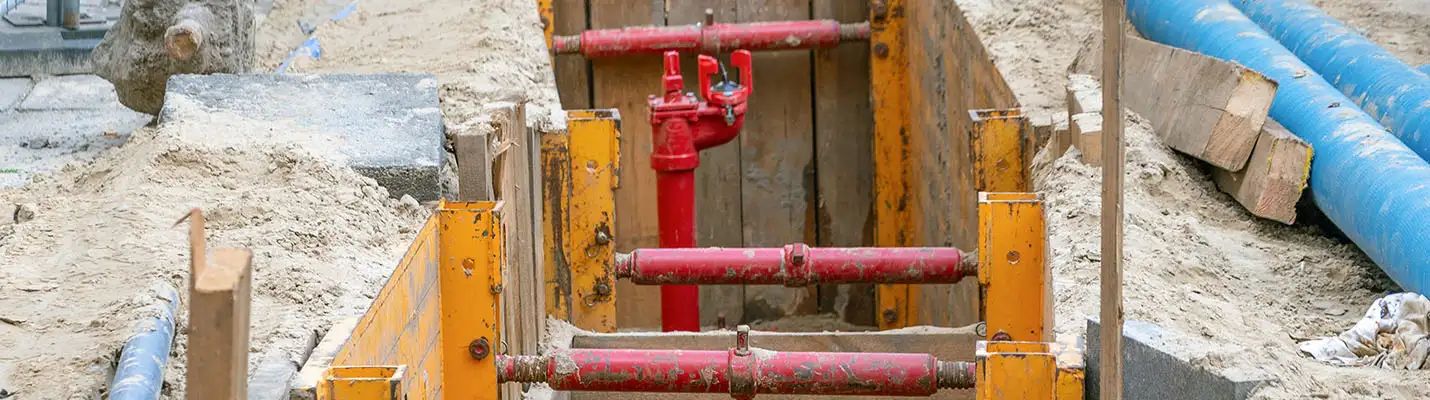
- Trenching can be deadly! Protect yourself with the facts. Get more information by visiting the OSHA Safety and Health Topics page on Trenching and Excavation.

- Concrete and its dusts can be dangerous to your health. To find out more, click
here. The OSHA Safety and Health Topics page: Concrete and Concrete Products - Manufacturing and Construction,

provides additional information.
-
Construction work may require working at heights. Learn more about fall protection. The National Institute for Occupational Safety and Health provides other valuable information on falls from elevations.
Accessibility Assistance: Contact the OSHA Directorate of Technical Support and Emergency Management at 202-693-2300 for assistance accessing PDF materials.
*These files are provided for downloading.
|
|