


Emergency Preparedness and Response
Emergencies can create a variety of hazards for workers in the impacted area. Preparing before an emergency incident plays a vital role in ensuring that employers and workers have the necessary equipment, know where to go, and know how to keep themselves safe when an emergency occurs. These Emergency Preparedness and Response pages provide information on how to prepare and train for emergencies and the hazards to be aware of when an emergency occurs. The pages provide information for employers and workers across industries, and for workers who will be responding to the emergency.

General Preparedness and Response
- Getting Started:
- OSHA Emergency Response Rulemaking
- Hazardous Waste Operations and Emergency Response (HAZWOPER)
- Psychological Resiliency
- ARC Ready Rating Program
- ARC Emergency App

Natural Disasters and Weather
- Earthquakes
- Floods
- Heat
- Hurricanes
- Lightning Safety
- Severe Weather
- Tornadoes
- Wildland Fire Smoke
- Wildfires
- Winter Weather






Oil; Chemical, Biological, Radiological, Nuclear, and Explosive (CBRNE) Incidents
- Biological Incidents
- Bomb/Explosion
- Chemical Incidents
- Fourth Generation Agent (FGA) Nerve Agent Resources for First Responders and First Receivers
- GF (Cyclosarin)
- Lewisite (L) Quick Reference Guide
- Mustard-Lewisite Mixture (HL) Quick Reference Guide
- Plague (Yersinia Pestis)
- Sarin (GB) Quick Reference Guide
- Soman (GD) Quick Reference Guide
- Sulfur Mustard (HD) Quick Reference Guide
- Tabun (GA) Quick Reference Guide
- VX Quick Reference Guide
- Oil Spills
- Preventing Emergency Responder Fatigue
- Radiation Emergencies

Disease Agents and Toxins

Reducing Lightning Hazards – When Working Outdoors
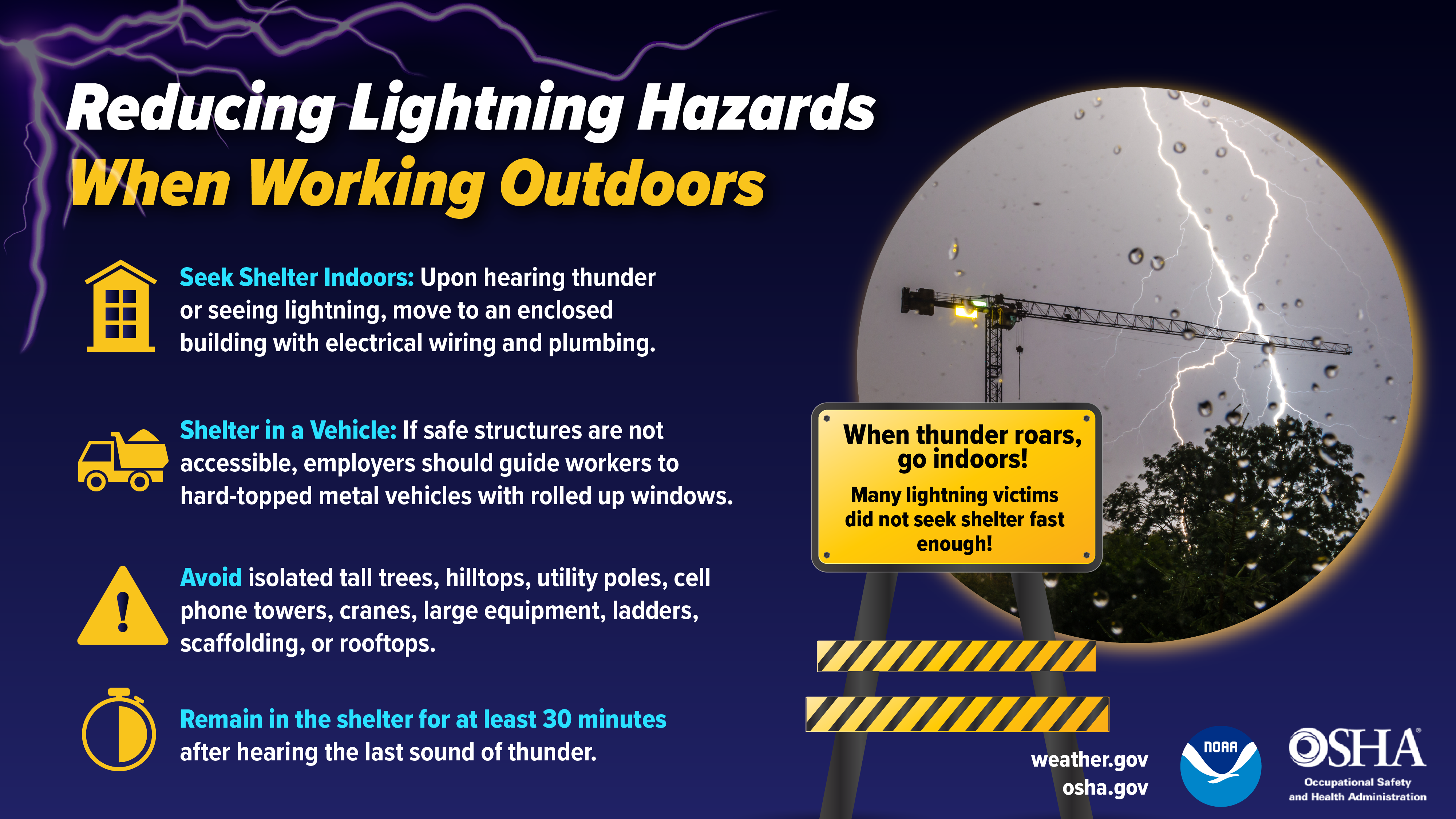
Infographic with a lightning effect, construction sign, and photo of a crane with lightning in the background. Reducing Lightning Hazards - When Working Outdoors Seek Shelter Indoors: Upon hearing thunder or seeing lightning, move to an enclosed building with electrical wiring and plumbing. Shelter in a Vehicle: If safe structures are not accessible, employers should guide workers to hard-topped metal vehicles with rolled up windows. Avoid isolated tall trees, hilltops, utility poles, cell phone towers, cranes, large equipment, ladders, scaffolding, or rooftops. Remain in the shelter for at least 30 minutes after hearing the last sound of thunder. Sign with the text, "When thunder roars, go indoors! Many lightning victims did not seek shelter fast enough!"
Be Aware of Lightning Hazards
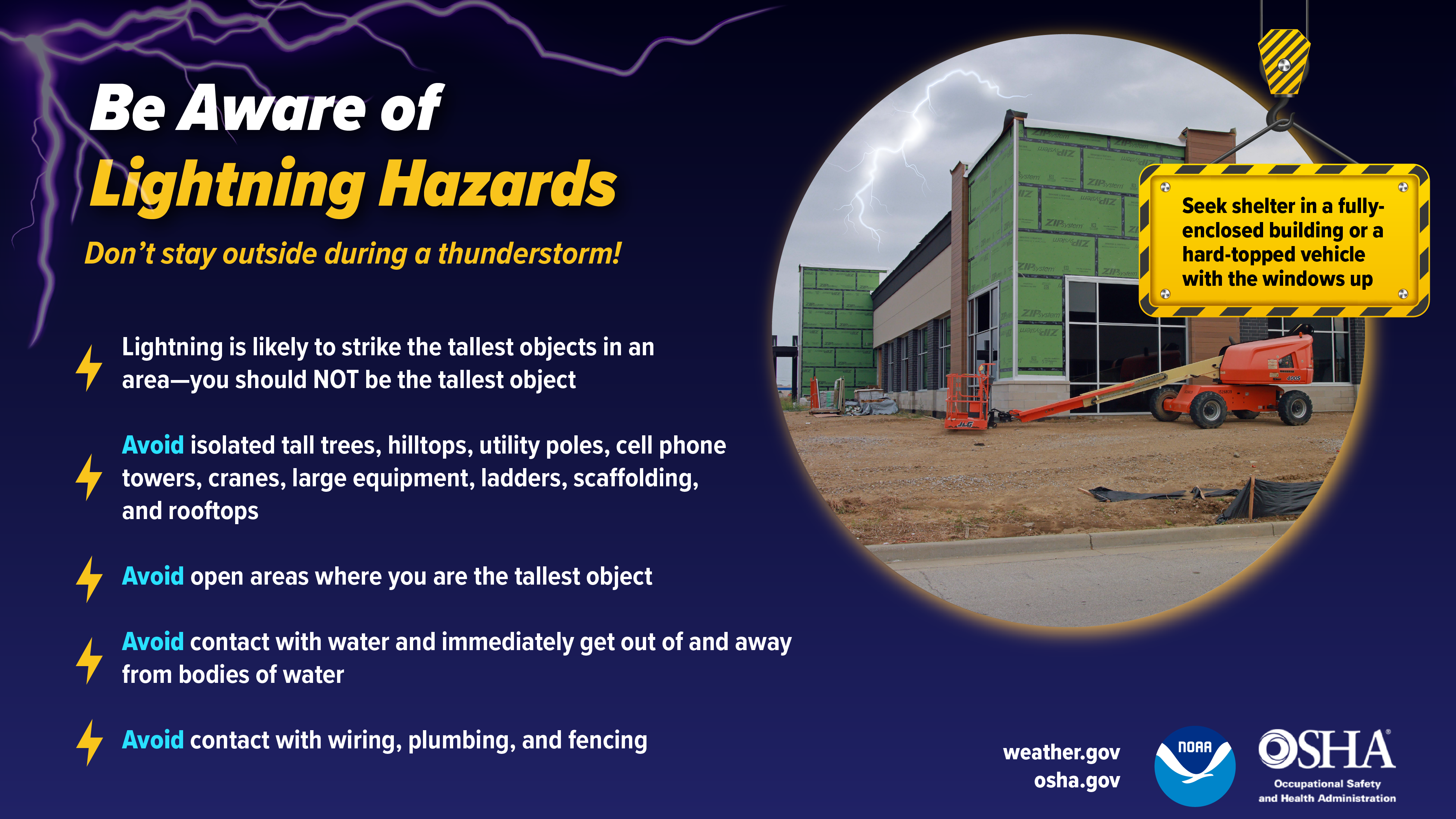
Infographic with a lightning effect, construction sign, and photo of a building under construction with lightning in the background. Be Aware of Lightning Hazards Don’t stay outside during a thunderstorm! Lightning is likely to strike the tallest objects in an area—you should NOT be the tallest object Avoid isolated tall trees, hilltops, utility poles, cell phone towers, cranes, large equipment, ladders, scaffolding, and rooftops Avoid open areas where you are the tallest object Avoid contact with water and immediately get out of and away from bodies of water Avoid contact with wiring, plumbing, and fencing
Don’t Wait For Rain to Take Shelter
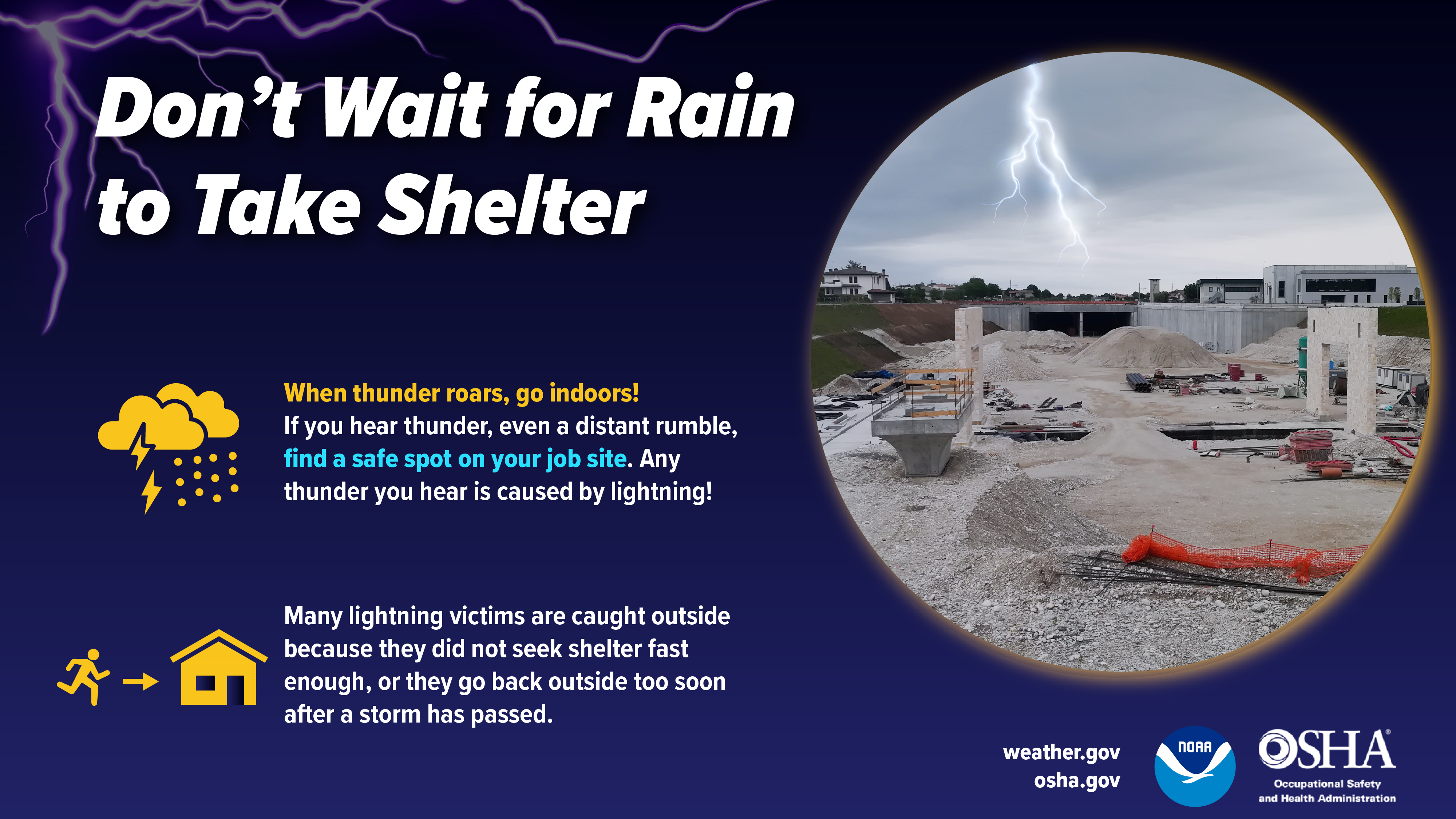
Infographic with a lightning effect and a photo of a construction site with lightning in the background. Don’t Wait for Rain to Take Shelter When thunder roars, go indoors! If you hear thunder, even a distant rumble, find a safe spot on your job site. Any thunder you hear is caused by lightning! Many lightning victims are caught outside because they did not seek shelter fast enough, or they go back outside too soon after a storm has passed.