skip navigational links Occupational Safety & Health Administration DOL.gov OSHA.gov DOL.gov
www.OSHA.gov
Airline Industry Airline Industry
Hazards and Solutions

Many airline workers may be unaware of the potential hazards in their work environment, which makes them more vulnerable to injury. The following references aid in recognizing and controlling hazards which may be present in the airline industry.

Ground Crew

Bag Room Gate Crew Ground Service Equipment
  • 54-Year-Old Certified Electrician Dies in North Carolina. National Institute for Occupational Safety and Health (NIOSH) Fatal Assessment and Control Evaluation (FACE) Program Report 86-47. Reports an incident involving a 54-year-old partner of an electrical contracting company (a certified electrician) who was electrocuted while he repaired airport runway lights. The lights were energized before the task was completed.
  • Controlling Carbon Monoxide Hazard in Aircraft Refueling Operations. US Department of Health and Human Services (DHHS), National Institute for Occupational Safety and Health (NIOSH) Publication No. 84-106, (1984, February 14). NIOSH investigators conducted an evaluation of the occupational health hazards of workers who fuel jet aircrafts. Discusses how dangerous concentrations of CO were found in truck cabs where workers spend a considerable amount of time sitting in idling vehicles.
  • Safe access to aircraft for catering operations. Health and Safety Executive (HSE), (2008, May). Deals with issues such as falls and guarding when servicing aircraft.
  • Report to Congress: Injuries and Fatalities of Workers Struck by Vehicles on Airport Aprons. US Department of Transportation (DOT), (2002, July), 877 KB PDF, 35 pages. The Wendell H. Ford Aviation Investment and Reform Act for the 21st Century (AIR-21) requires the Federal Aviation Administration (FAA) to study injuries to airport apron workers struck by vehicles and to investigate actions to enhance apron worker safety.
  • Safety and Health Requirements Manual. Electronic Library of Construction Occupational Safety and Health (eLCOSH) and the US Army Corps of Engineers Safety Engineering, (2003, November 3).
    • Airfield Operations. 113 KB PDF, 4 pages. Provides safety and health requirements for airfield operations.
Ramp
  • Baggage Handling: Ramp. OSHA eTool. Addresses hazards associated with planeside loading and unloading using manual, semi-automated, and automated baggage systems.
  • Ramp Safety. Aviation Safety Reporting System (ASRS) Directline, (1996, June). Provides an overview of ramp operations and recommendations to avoid ramp operation incidents.
Ticket Counter
  • Baggage Handling: Baggage Make-up Room. OSHA eTool. Addresses possible hazards and solutions associated with baggage cart loading and unloading, and general make-up room hazards.
  • Alaska Airlines Evaluation of Customer Service Agents. State of Washington Department of Labor and Industries, (2001, October), 748 KB PDF, 10 pages. Provides project evaluation of customer service agents (CSAs) for one airline at SeaTac International Airport.
Flight Crew

Cockpit Crew
  • Flight Safety Digest. Flight Safety Foundation (FSF). Flight Safety Digest is a publication of the FSF addressing general flight and cockpit safety issues.
Flight Attendants
  • Cabin Crew Safety. Flight Safety Foundation (FSF). This is a publication of the FSF and links to archives dating back to1988.
  • Flight attendants are also responsible for assisting passengers with special needs. See Gate Crew for additional information.
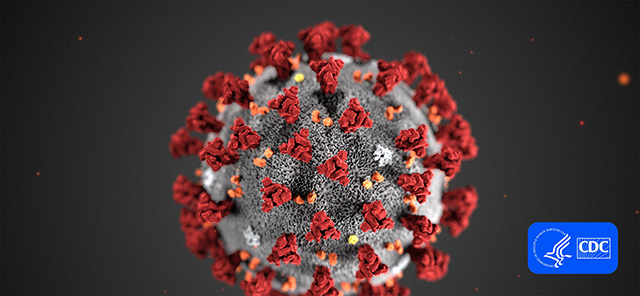
For additional information regarding identifying and controlling the hazards associated with the airline industry, see OSHA's Safety and Health Topics Pages on: Severe Acute Respiratory Syndrome (SARS)
  • Information Regarding Severe Acute Respiratory Syndrome (SARS). OSHA, (2003, May 30). Provides a collection of information about SARS for employers, employees, and other interested parties. OSHA may update this information as necessary.
  • Severe Acute Respiratory Syndrome (SARS). Centers for Disease Control and Prevention (CDC). Contains the latest SARS information, including CDC guidelines and recommendations for clinicians, health departments, laboratories, travelers, air travel workers, and others. Also provides links to the World Health Organization (WHO) and other international resources.
    • Frequently Asked Questions about SARS. (2005, May 3). Answers questions about Severe Acute Respiratory Syndrome (SARS), its origin and spread. Also addresses questions about CDC recommendations for individuals, travelers, households, and health-care settings.
  • Severe Acute Respiratory Syndrome (SARS). World Health Organization (WHO). Provides the public and professionals global information about Severe Acute Respiratory Syndrome (SARS) from WHO.
  • For additional information regarding SARS and other microorganisms and their associated toxins, see OSHA's Biological Agents Safety and Health Topics Page.
 Safety and
 Health Topics
 
  Airline Industry
  Standards
  Hazards and Solutions
  Safety and Health Programs
  Additional
Information
  Credits
 
Content Reviewed 06/02/2009


Accessibility Assistance
Contact the OSHA Directorate of Technical Support and Emergency Management at 202-693-2300 for assistance accessing PDF materials.

Back to TopBack to Top www.osha.gov www.dol.gov

Contact Us | Freedom of Information Act | Customer Survey
Privacy and Security Statement | Disclaimers
Occupational Safety & Health Administration
200 Constitution Avenue, NW
Washington, DC 20210
Page last updated: 06/02/2009