|
Tree Care Industry |
|
| Hazard Recognition |
|
|
|
Many hazards in the tree care industry are potentially
fatal. Overhead power lines, falling branches, and faulty safety equipment are
just a few of the dangers. The following references aid in recognizing some of
the hazards that may be encountered by tree care professionals.
National Institute for Occupational Safety and Health
(NIOSH) Fatality Assessment and Control Evaluation (FACE) Reports
-
NIOSH FACE Program. The National Institute for Occupational Safety and
Health (NIOSH) Fatality Assessment and Control Evaluation (FACE) Program. This
program concentrates on investigations of fatal occupational injuries. The
primary intent of this program is to provide interested users with access to the
full text of hundreds of fatality investigation reports including the following:
Struck-by
Electrocution
Falling
Caught-in
Common Shop Hazards and Tree Care Considerations
- Slipping hazards present from oils or solvents on the floor. [1910.22]
- Fire hazards in shop areas. [1910.106,
1910.157]
- Adequate fire extinguishers [1910.157]
and first aid kits [1910.151]
in the shop. It is recommended that consideration be taken to also include
extinguishers in work vehicles as appropriate.
- Emergency response plans. [1910.38]
- Hazard Communication Issues – the need to identify all hazardous substances
within the shop area (carbon monoxide, welding fume, wood dust, metal dust,
solvents, fertilizers) and develop a program that addresses MSDSs, labeling, and
employee training. [1910.1200]
- If corrosive chemicals are used, emergency eyewashes and showers are
required. [1910.151]
- Stairways need railings if more than 4 stairs - differences in "open" and
"closed" stairs are clarified in. [1910.24]
- All safety guards must be in place and operational on all shop tools. [1910
Subpart O]
- Lockout/tagout program requirements. [1910.147]
- Compressed air used for cleaning purposes must be reduced to less than 30
p.s.i and then only with effective chip guarding and personal protective
equipment. [1910.242(b)],
[Hazard
Information Bulletin]
- When the periphery of the blades of a fan is less than seven feet above the
floor or working level, the blades shall be guarded. [1910.212(a)(5)]
- Storage issues with Liquefied Petroleum Gas (LPG) containers. [1910.110]
- Workrests and tongue guards of grinders should be properly adjusted. [1910.215]
Additional Resources
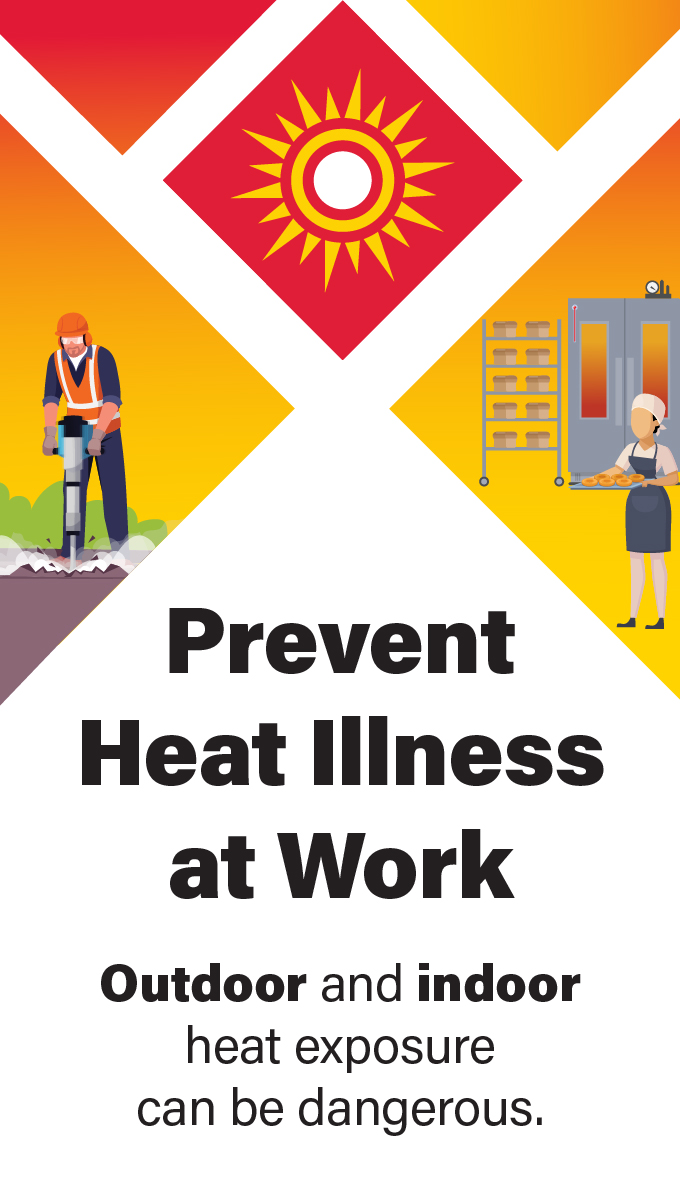
- Working Outdoors in Warm Climates. OSHA Fact
Sheet, (2005, September), 26 KB
PDF, 2 pages.
-
Injury Associated with Working Near or Operating Wood Chippers. National
Institute for Occupational Safety and Health (NIOSH) Hazard ID, (1999, August).
Contains detailed descriptions of hazards associated with wood chippers and
recommendations for prevention.
-
Prevention of Slips, Trips, and Falls. Canadian Centre for Occupational
Health and Safety (CCOHS), (1999, June 10). This document is provided by the
Inquiries Service at CCOHS, whose mandate is to promote improvements in
occupational health and safety by providing practical information to answer
workplace concerns.
|
|
|
|