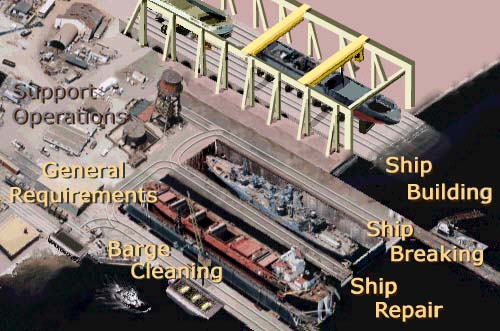
Shipbreaking
» Surface Preparation for Removal of Hazardous Materials
|

Figure 1:
Removal of paint from vessel's hull.

Figure 2:
Workers with respirators, ear muffs and other personal protective
equipment (PPE).
|
Surface preparation in shipbreaking involves removing of
hazardous materials such as paints containing polychlorinated biphenyls (PCBs) and lead as well as
flammable or combustible liquids before conducting hot work or salvage
operations. Methods include:
Surface preparation may range from simply wiping down
equipment to totally stripping off
coating. Hazards associated with surface prep may include:
After the spaces or surfaces are
evaluated
and the cleaning process is
complete, the shipyard must determine what personnel, equipment, and materials
are required for the surface preparation and conduct a hazard
assessment for PPE. See
PPE for Surface Preparation. [1915.152(b)]
Surface Preparation and Preservation (1915 Subpart
C) does not apply to shipbreaking operations, however many of the
precautions in this module are good work practices to protect workers.
Note: Confined space entry is one of the leading
hazards associated with barge cleaning. Review the
Shipbreaking: Confined/Enclosed
Spaces and Other Dangerous Atmospheres
chapter for information on how to protect workers from this hazard.
|
Toxic Cleaning Solvents
(for example, mineral spirits, diesel fuel, degreasers)
|
Surface preparation may range from simply wiping down to totally stripping off coating. Cleaning solvents and degreasers may expose workers to the following:
In
addition, a hazard assessment must be conducted for selecting appropriate PPE. See PPE for Surface Preparation. [1915.152(b)]
|

Figure 3: Worker protected from toxic fumes with SCBA respirator.
|
Back
to Top
|
|
|
Chemical Removers (for example, paint stripper, methylene chloride)
|
Chemical paint strippers and removers used for surface preparation include
corrosive acids, (for example, hydrochloric and phosphoric), alkalis (for example, sodium hydroxide/lye),
chlorinated hydrocarbons (for example, trichloroethane) and carcinogens (for example, methylene
chloride). These chemicals may present severe eye, skin and respiratory exposure hazards.
|

Figure 4: Limited access makes it more difficult for workers to exit to escape hazards.
|
Paint strippers and removers potentially expose workers to:
In
addition, a hazard assessment must be conducted for selecting appropriate
personal protective equipment (PPE). See PPE for Surface Preparation. [1915.152(b)]
|
Back
to Top
|
|
|
Mechanical Removers (e.g.,
abrasive blasting, needle gunning and grinding) |
Surface prep includes mechanical paint removal operations such as abrasive blasting, flame removal, use of
power tools (for example, needleguns, scalers, sanding) and the use of high-pressure
equipment. These operations may expose workers to:
Some of these operations may also be considered Hot Work. In
addition, a hazard assessment must be conducted for selecting appropriate PPE.
See
PPE for Surface Preparation.
[1915.152(b)]
|

Figure 5: Worker sandblasting.

Figure 6: Mechanical removal of paint from vessel's hull.
|
Back
to Top
|
|
|
|
| |
|