|
 |
 |
 |
      |
 |
What
types of Personal Protective Equipment (PPE)
are necessary?
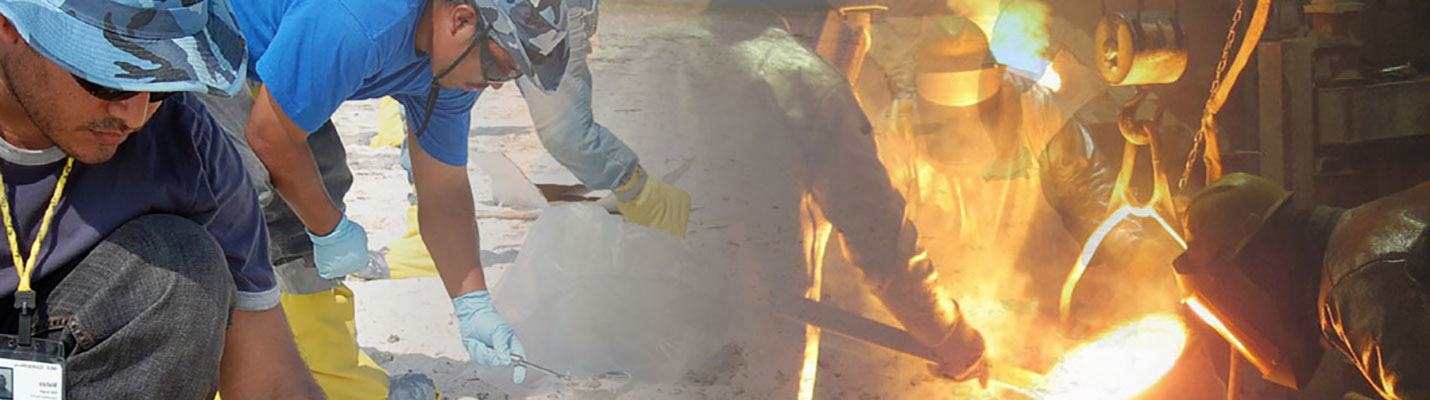
Personal protective equipment
(PPE) shields or isolates workers from health and
safety hazards in the workplace. In a site where
anthrax spores may be present, PPE protects workers
from exposure to respiratory and skin hazards and
prevents the spread of contaminants to uncontaminated
areas.
|
|
 |
| Skin
Protection |
Wearing
protective clothing protects the skin and
can prevent the transfer of contamination
off-site. The appropriate level of skin
protection, which should be outlined in
the HASP,
is determined based on the site conditions.
The appropriate level of skin protection
used at an anthrax-impacted site should
include, at a minimum, the following:
- Tyvek or equivalent coveralls
- Unpowdered disposable gloves made of
lightweight nitrile or vinyl
Appropriate PPE selection
will take into account the following:
|
|
 |
|
|
|
- Does it protect the skin from contact
with anthrax spores?
- Does it protect the worker form contact
with chemicals used in the response?
- Does it protect the worker from other
site hazards identified in the HASP?
|
|
 |
- Can it can be taken off safely and left at
the site to prevent the transfer of contamination
off-site.
The following links include
more detailed information on Skin Protection:
|
| Respiratory
Protection |
Since
airborne spores generally pose the greatest
threat to personnel, respiratory protection
is a necessary component of the PPE program.
The OSHA respiratory protection standard
(29 CFR 1910.134)
requires you to establish and comply with
an effective respiratory program. Program
requirements include:
- Program administration;
- Worksite-specific procedures, respirator
selection, employee training, fit testing;
- Medical evaluation; and
|
|
 |
- Respirator use, cleaning, maintenance, and
repair.
To date, experience has
shown the following to provide adequate protection
for most response, sampling, and decontamination
activities involving spores:
- Powered air-purifying respirators (PAPRs)
with P100 filters, or
- Full-face negative pressure air purifying
respirators (APRs) with N95 filters.
Some emergency response
operations may require that first responders wear
the following with their normal Hazardous Material
response ensembles:
- Self-Contained Breathing Apparatus (SCBA).
The following links include
more detailed information on Respiratory Protection:
|
| PPE
Training |
It is essential
that personnel be trained on the proper use of
PPE to ensure they receive greatest protection
possible. Employers should certify in writing
that the training has been provided and that
employees understand what they need to know about
PPE. The certification should show the name of
each employee trained and the dates and types
of training provided.
Workers
should be trained to know:
- When PPE is necessary
- What type of PPE to use
- Where the PPE is located
- How the PPE should be worn
|
|
 |
- What the PPE limitations are
- How long the PPE is likely to last
- How to properly maintain and dispose of the
PPE
In addition, appropriate
personnel decontamination and contamination containment
procedures are needed for workers using PPE to
prevent exposure to anthrax. In general, these
procedures are similar to those for asbestos abatement
and include:
- Isolating contaminated areas
- Negative-pressure ventilation
- A three- to five-stage decontamination line
with a shower for equipment and personnel
- Appropriate waste disposal
For additional detailed
information about Respiratory Protection see the
following:
|
|
|
| |
|
| | | | |
| | |
|
 |
 |
 |
|